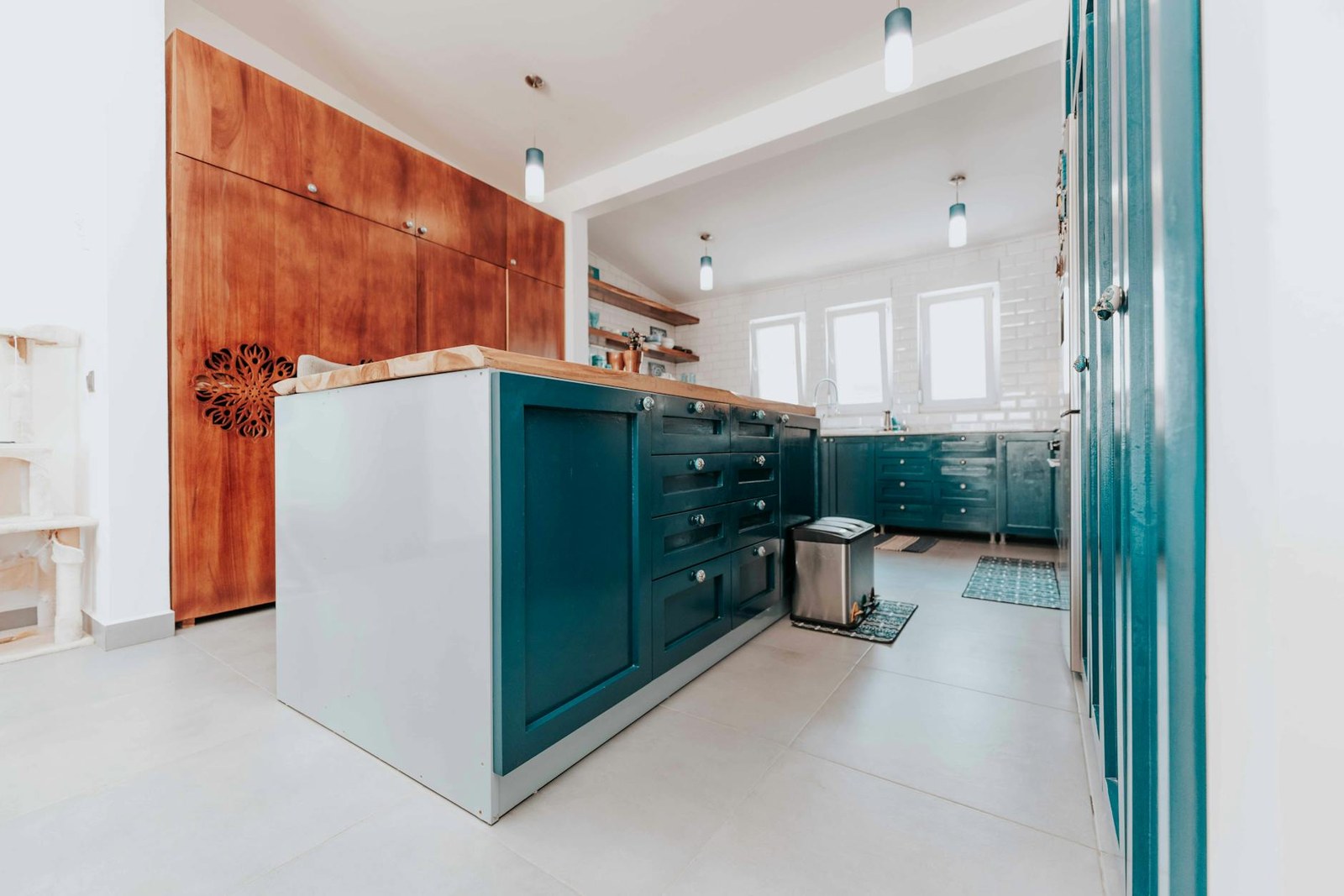
Modern Kitchen Design — 9 Ideas That Won’t Date
Modern kitchen design is the broadest stylistic label in Australian renovation right now. It covers everything from minimalist handleless cabinetry to industrial concrete-and-steel showpieces, and the term is so loose it sometimes becomes meaningless. The way to read it usefully is to define the rules of modern kitchen design — clean lines, restrained ornament, considered materials, integrated function — and then look at the design moves that consistently age well within those rules.
This guide walks through nine modern kitchen design ideas that have aged well over the past decade and look set to keep aging well into the 2030s. Each is paired with the Adelaide context — what the move costs, where it works best, and what to avoid. Pricing is current to May 2026 and uses HIA, Master Builders SA and Houzz state-of-data ranges for the South Australian market.
What “modern” actually means
In kitchen design terms, “modern” describes a family of styles that share five rules:
- Clean lines, minimal ornament. Cabinetry profiles are flat or framed-but-simple; mouldings, applied panels, and decorative carvings are absent.
- Restrained palette. Two or three colours total — usually a neutral foundation with a single contrast.
- Considered materials. Materials are chosen for what they are, not to imitate something else. Stone reads as stone; timber reads as timber.
- Integrated function. Appliances, ventilation, and storage are concealed within the cabinetry as far as practical.
- Architectural rather than decorative. The kitchen reads as part of the building, not as furniture placed inside it.
Within those rules sit several specific styles — Scandinavian, Japandi, minimalist, industrial, contemporary transitional, and architectural-modern. The nine ideas below sit comfortably across all of them.
1. Handleless cabinetry
Handleless cabinetry is the single biggest visual change in Australian kitchen design over the past decade. The cabinetry doors and drawer fronts have no visible hardware — they open with a finger-pull groove, an integrated J-pull profile, or a touch-latch mechanism.
The three working systems:
- Integrated J-pull (or “edge pull”). A continuous horizontal channel runs along the top edge of each drawer and door, hidden from view but accessible when you reach above the cabinetry. The most architectural option; reads cleanest on long horizontal cabinetry runs.
- Push-to-open touch latch. The door opens when you press its face. No groove, no visible pull. Works for short runs and shallow drawers; less robust for heavy drawers (which over time fail to latch reliably).
- Recessed finger-pull. A small concave groove machined into the top edge of the door or drawer face. Visible if you look closely, but reads as part of the cabinetry profile.
Why handleless ages well: the absence of hardware removes the single fastest-dating element of a kitchen. Hardware finishes cycle through trend periods (chrome in the 90s, brushed nickel in the 2000s, matte black in the 2010s, brushed brass in the 2020s); handleless cabinetry sits outside the cycle.
Cost premium: about 8 to 12 per cent over cabinetry with conventional hardware. The hardware saving is real but the additional joinery for the J-pull profile or the cost of touch-latch mechanisms offsets it.
Where it works best: modern new-builds, modern transitional renovations, contemporary heritage renovations where the kitchen is set back at the rear.
Where to avoid: Hamptons or French provincial styles (the absent hardware reads as wrong-era for those styles).
2. Integrated appliances
Integrated appliances are appliances concealed behind cabinetry doors that match the rest of the kitchen — fridges, dishwashers, microwaves, and increasingly steam ovens and warming drawers. The visual effect is a continuous run of cabinetry with no appliance fronts breaking the line.
The four typically integrated:
- Fridge. Full-height integrated fridges sit behind two-pack or veneer cabinetry doors, with the cooling coil at the top. Capacity is usually slightly less than a freestanding equivalent (the cabinetry takes some internal volume).
- Dishwasher. Integrated dishwashers have a cabinetry-faced front panel; the controls sit on the top edge of the door, hidden when closed.
- Microwave or steam oven. Built into a cabinetry tower or under a wall oven; the appliance front becomes part of the cabinetry composition rather than sitting out as a separate face.
- Rangehood. Concealed in the cabinetry above the cooktop, vented externally. Either a slide-out rangehood (extends out when in use) or a fully-integrated rangehood with a cabinetry-faced fascia.
Cost premium: integrated appliances cost 30 to 60 per cent more than freestanding equivalents. An integrated fridge typically runs $4,500 to $9,000 versus $2,500 to $4,500 for a freestanding fridge. Integrated dishwashers run $1,500 to $3,500 versus $1,200 to $2,500 freestanding.
Where it works best: premium kitchens where the visual continuity is the design priority, or smaller open-plan kitchens where freestanding appliances would dominate.
Long-term consideration: integrated appliances are tied to the cabinetry. When the appliance fails (typically 10 to 15 years for premium brands), the replacement must fit the same dimensions or the cabinetry needs adjustment. Read the integrated appliances cost-versus-value article for the full economic analysis.
3. Two-tone cabinetry
Two-tone cabinetry pairs a darker or richer colour on the island or lower cabinets with a lighter colour on the wall cabinets and tower units. The contrast adds depth without ornament; the two colours read as architectural rather than decorative.
The five working two-tone combinations in Adelaide right now:
- White wall cabinets + sage green island. The most-requested combination; reads as restful and modern.
- Putty wall cabinets + Hamptons navy island. More formal; reads as Hamptons-modern.
- White wall cabinets + warm walnut timber-veneer island. Reads as Scandinavian-modern; suits open-plan living-kitchen-dining.
- Off-black wall cabinets + white island. The reversed contrast; reads as design-led.
- Stone-grey wall cabinets + brass-trimmed island. Reads as architectural-modern; suits new-builds.
Cost: two-tone is typically a 5 to 8 per cent premium over single-colour cabinetry — additional setup time on the spray-finishing line for two colours rather than one.
4. Stone-on-stone
Stone-on-stone is the design move where the benchtop material continues vertically up the splashback as a single continuous slab. The visual effect is monolithic; the kitchen reads as a single material gesture rather than as a benchtop with a separate splashback.
The four working stone-on-stone treatments:
- Continuous slab from bench to underside of wall cabinets. Standard splashback height, single slab.
- Full-height stone splashback to ceiling. The slab continues to the ceiling; reads as the most architectural option.
- Mitred-edge waterfall island. The benchtop slab continues down both ends of the island, with mitred 90-degree corners so the veining wraps continuously.
- Bookmatched stone. Two slabs cut from adjacent positions in the source block, mirrored at the install seam so the veining flows from one side to the other.
Cost: stone-on-stone adds $4,000 to $12,000 to a kitchen depending on the height of the splashback, the slab type, and whether bookmatching is specified. Read the full breakdown in our stone benchtops buyer’s guide.
5. Hidden butler’s pantry
The hidden butler’s pantry is a butler’s pantry concealed behind cabinetry doors that match the rest of the kitchen. From the kitchen, it reads as a continuous run of cabinetry; behind the doors is a fully-functional second prep zone.
The configuration:
- A pair (or run) of full-height cabinetry doors on the kitchen side, matching the rest of the cabinetry colour and profile.
- Behind the doors, a walk-through or walk-in pantry with bench, sink, secondary appliances (microwave, second oven, wine fridge), and storage.
- Either galley layout (two parallel runs of cabinetry inside the pantry) or U-shape (three sides), depending on footprint.
Why it works: the kitchen reads as clean, minimal, and architectural; the actual cooking and prep mess lives out of sight in the pantry. The hidden butler’s pantry is the working solution for open-plan homes where the kitchen is on visual display from the living and dining areas.
Cost: $15,000 to $35,000 added to a kitchen renovation depending on size, internal fit-out, and second-appliance count. Read the butler’s pantry design ideas guide for the full layout options and cost bands.
6. Statement lighting
Modern kitchens carry statement lighting — a single oversized pendant, a sculptural pair, or a dramatic linear fitting — over the island as the room’s design anchor. The lighting reads as architectural rather than decorative.
The four current statement-lighting types:
- Oversized single sculptural pendant — a 50 to 80 cm diameter glass, ceramic, or metal fitting, hung at 70 to 80 cm above the bench.
- Linear LED fitting — a single horizontal element, usually 1.2 to 1.8 m long, sometimes with multiple light heads.
- Cluster of three matched pendants — modern handleless equivalent of the Hamptons trio, but in geometric or industrial fittings rather than glass.
- Architectural cove lighting — concealed LED strip along the underside of the rangehood or the soffit above the wall cabinets, no visible fitting at all.
The lighting plan for a modern kitchen also includes ambient downlights on a separate dimmable circuit, under-cabinet warm LED for task lighting, and toe-kick LED for floor-level wash. Read the kitchen lighting design guide for the full layered lighting plan.
7. Texture mixing
Modern kitchens that age well mix textures rather than colours. The rule is simple: if the palette is restrained (two or three colours), the textures need to do the visual work.
The four texture moves that consistently age well:
- Stone + timber. A stone benchtop paired with a timber-veneer island or open feature shelving. Stone reads as cool and architectural; timber reads as warm and grounded.
- Matte + gloss within the same colour. Matte two-pack wall cabinets paired with high-gloss or polished stone island. The texture contrast adds depth without colour contrast.
- Honed + polished stone. A honed (matte) stone benchtop paired with a polished (gloss) stone splashback, or vice versa. Same material, different surface treatment.
- Linear timber slat feature. A vertical or horizontal timber slat detail on a tower unit, the rear of an island, or a feature wall. Reads as architectural and adds the natural texture without dominating.
What to avoid: mixing more than three textures in a single kitchen. The space reads as busy rather than considered.
8. Open-plan living-kitchen-dining
Modern Australian kitchens are almost universally open-plan. The kitchen, dining, and living rooms share a single visual zone, separated only by furniture placement and ceiling treatment. The kitchen design needs to work as the visual anchor of the larger zone, not just as a kitchen on its own.
The design moves that make an open-plan kitchen work:
- Generous island. The island acts as the bench seating zone, the prep zone, and the visual divider between cooking and living. 2.4 to 3.6 m long is the working range.
- Considered ceiling treatment. Continuous ceiling height across the open-plan zone, or a coffered ceiling that defines the kitchen subtly. Avoid a dropped ceiling above only the kitchen — it reads as a kitchen-grade space rather than as part of the living area.
- Materials that flow. The same flooring runs through kitchen and living areas; the cabinetry colours pick up tones from the living-area wall paint and joinery.
- Concealed storage. The hidden butler’s pantry and integrated appliances earn their cost in open-plan homes — without them, the kitchen mess is on permanent display.
For the resale-value comparison between open-plan and closed kitchens, read open-plan kitchen vs closed kitchen — which adds more value.
9. Negative-space discipline
The least-obvious modern design idea: the discipline to leave space empty. A modern kitchen has fewer cabinets, fewer features, fewer decorative elements than a traditional kitchen. The empty space is what reads as architectural.
The discipline shows up in:
- Lower cabinet density. Modern kitchens use drawer banks rather than cabinet doors, and accept fewer linear metres of cabinetry overall in exchange for visual restraint.
- Wall cabinet restraint. Wall cabinets are minimised, sometimes eliminated entirely on one wall. The empty wall reads as architectural; the splashback or feature wall does the visual work.
- Single feature decisions. One statement light, one feature splashback, one timber accent. Adding two of each compounds visually and the space reads as decorated rather than designed.
- Generous bench unused. The bench is allowed to read as bench. Appliances are stored, not displayed; the bench’s job is to be empty most of the time.
The Japanese-Scandinavian crossover style “Japandi” is the purest expression of this discipline. The Adelaide adaptations are softer — Adelaide buyers usually want more storage than a strict Japandi brief allows — but the underlying restraint is what makes a modern kitchen age well over twenty years.
How modern kitchens are costed in Adelaide
A modern handleless kitchen with integrated appliances, two-tone cabinetry, full-height stone splashback, and a hidden butler’s pantry typically runs in the upper bands of an Adelaide kitchen renovation:
- Mid-tier modern (handleless, two-tone, stone splashback, freestanding appliances) — $48,000 to $68,000.
- Premium modern (handleless, integrated appliances, stone-on-stone, hidden butler’s pantry) — $75,000 to $120,000.
- Architect-led custom (premium materials, custom hardware, statement lighting, full integration) — $130,000 to $250,000-plus.
The premium for “modern” over “transitional” or Hamptons is real but moderate — about 10 to 20 per cent at the same spec level. The integrated appliances and hidden butler’s pantry are where most of the modern premium is spent. Read how much a kitchen renovation costs in Adelaide for the full cost-band breakdown.
For the contractor-vetting checklist, read how to find a kitchen renovation contractor you can trust — modern kitchens are particularly intolerant of poor execution because the clean lines have nowhere to hide quality issues.
Frequently asked questions
Is modern kitchen design a passing trend?
No. The five rules of modern kitchen design (clean lines, restrained palette, considered materials, integrated function, architectural rather than decorative) have held since the Bauhaus movement in the 1920s. The specific style cycles change — Scandinavian in the 2010s, Japandi in the late 2010s and 2020s — but the underlying rules don’t. A modern kitchen built today will still read as appropriate in twenty years.
Will a handleless kitchen still look current in 2040?
Almost certainly yes. The integrated J-pull and finger-pull profiles have been in continuous use since the 1990s and have aged through three style cycles without falling out of fashion. Touch-latch systems are the more vulnerable mechanism (some homeowners replace them with handles when reliability fails), but the J-pull profile cabinetry will still read correctly in 2040.
Are integrated appliances worth the cost premium?
Depends on the kitchen. In open-plan homes where the kitchen is on permanent display from living and dining areas, integrated appliances are worth the 30 to 60 per cent premium because they preserve the visual continuity. In closed or semi-closed kitchens, the premium is harder to justify and most homeowners do better with premium freestanding appliances. Read the full integrated appliances analysis.
Can a modern kitchen work in a heritage home?
Yes — the working pattern is to set the modern kitchen at the rear of a heritage home, often as part of a contemporary rear extension. The contrast between the heritage front rooms and the modern rear kitchen reads as deliberate rather than confused. The transition usually happens at a clearly-defined point — a doorway, a flooring change, or an architectural step.
What’s the cheapest a credible modern kitchen can cost?
The honest entry tier for a credible modern kitchen in Adelaide is about $32,000 — handleless flat-panel cabinetry, low-silica engineered quartz benchtop, basic integrated dishwasher (other appliances freestanding), full-height stone splashback. Below that, the cost cuts compromise the clean-lines aesthetic that defines modern.
Is matte black hardware modern?
Matte black has been the design-led modern hardware finish since 2015 and is now mainstream. It’s still current in 2026 but is no longer trend-leading; the current trend-leading finishes are brushed stainless (knurled grip), dark bronze, or absent (handleless). Matte black on a modern kitchen still reads as competent — it just doesn’t read as design-leading.
How long does a modern kitchen renovation take?
Mid-tier modern with no structural change runs the standard 10 to 14 weeks from signed quote to final install. Premium modern with hidden butler’s pantry, integrated appliances, and stone-on-stone treatments runs 14 to 18 weeks. Architect-led custom runs 18 to 24 weeks plus the council consent timeline if structural change is involved. Read the kitchen renovations process walk-through for the week-by-week schedule.
Get a free quote to discuss your modern kitchen brief with a Kitchen Fox designer.