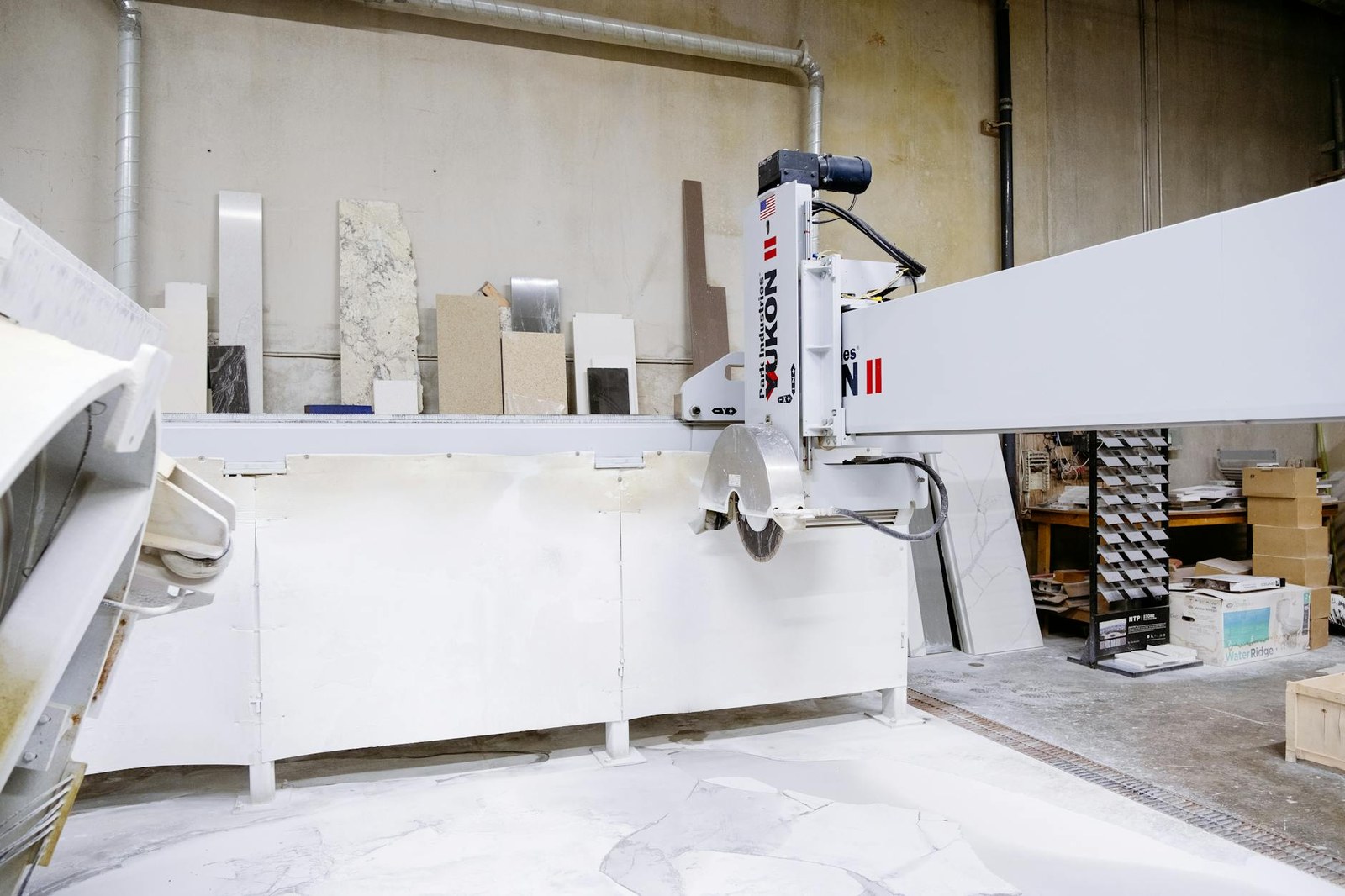
Engineered Stone Adelaide — Post-Ban Compliant Surfaces
On 1 July 2024, high-silica engineered stone was prohibited Australia-wide — the worker-safety response to a national silicosis crisis affecting stonemasons and kitchen-fabrication trades. The ban changed what’s legal to install in Australian kitchens, and what’s safe to fabricate. Kitchen Fox installs only engineered-stone-ban-compliant surfaces, with documented compliance at fabrication and on-site templating.
Get a free quote on a benchtop →
What the ban changed
The Australian engineered-stone prohibition (effective 1 July 2024) bans the use of engineered stone products containing more than the prohibition silica threshold by weight. The ban is a workplace-safety measure responding to silicosis — an irreversible lung disease caused by inhaling crystalline silica dust generated when high-silica engineered stone is cut, ground or polished. The ban covers the supply, installation, manufacture and processing of high-silica engineered stone in Australia.
What’s banned:
- High-silica engineered stone slabs (above the prohibition threshold).
- The use, supply, manufacture and processing of those slabs.
- The installation of new high-silica engineered stone benchtops, panels, vanity tops or splashbacks.
What remains legal:
- Low-silica engineered stone — products reformulated below the prohibition threshold.
- Porcelain slabs — sintered porcelain, no crystalline silica issue at the same scale as engineered stone.
- Sintered stone (Dekton, Lapitec, Neolith) — different fabrication chemistry, compliant.
- Natural stone — granite, marble, travertine, basalt. Crystalline silica is present but ban specifically targets engineered (manufactured) stone product.
- Solid surface (Corian, Hi-Macs, acrylic composite) — different chemistry entirely.
- Repair and maintenance of existing high-silica engineered stone benchtops already installed before the ban.
Read the full regulatory landscape — engineered stone in 2026: what the Australian ban means for your kitchen.
What we install in 2026
Kitchen Fox works with the post-ban material set:
- Low-silica engineered stone. Caesarstone, Silestone, Smartstone, Essastone — major brands have reformulated to compliant low-silica products. The look and feel mirror pre-ban engineered stone with the silica content under the prohibition threshold.
- Porcelain. Large-format slabs (Laminam, Florim, ABK), heat-resistant, UV-stable, frost-tolerant. The fastest-growing post-ban category.
- Sintered stone. Dekton, Lapitec, Neolith. The most durable surface available. Premium spec.
- Natural stone. Granite, marble, travertine. Classic Hamptons and provincial-style spec.
- Solid surface. Corian, Hi-Macs. Seamless joins, repairable, accessible-design friendly.
Worker safety on Adelaide installs
The ban exists because stonemasons and kitchen-fabrication workers were dying. Kitchen Fox treats fabrication and on-site templating safety as non-negotiable. Our stone-fabrication partners follow Safe Work Australia and SafeWork SA requirements for stone fabrication, including:
- Wet-cutting only. All slab cuts, edge profiles, sink and cooktop cut-outs done with water-fed tooling. Dry cutting is non-compliant and we don’t tolerate it.
- PPE on every cut and template. P3 or PAPR respirators, full eye protection, hi-vis with cuff seals.
- Air monitoring at the fabrication shop. Documented compliance with the workplace exposure standard for crystalline silica.
- On-site templating with low-dust digital methods (laser, photogrammetry) where possible. Where on-site cutting is unavoidable, water-fed tools and respirator protection.
- Worker health monitoring — fabricators registered with the relevant SA health surveillance program for crystalline silica exposure.
If a Kitchen Fox install requires on-site cutting of any silica-containing material, our trades follow the workplace exposure protocol. We’re happy to brief any homeowner who asks about the protocol — knowledge of what’s happening in your house is part of the service.
What this means for your renovation
For most Adelaide kitchen renovation buyers in 2026, the practical implications of the ban are:
- Your benchtop choice is wider, not narrower. Porcelain and sintered stone have moved from premium-niche into the mainstream. Most major brands now stock low-silica engineered as their default.
- Expect to see “low-silica” on the slab labels. The brand names are familiar (Caesarstone, Silestone, Smartstone) but the formulations have changed.
- Ask about safe fabrication. Reputable Adelaide fabricators run wet-cutting protocols and provide air-monitoring documentation on request.
- Existing high-silica engineered stone benchtops can stay. Pre-ban benchtops in your home are legal to use, repair and maintain.
- Don’t get caught with non-compliant supply. A small number of operators have attempted to install pre-ban stockpile slabs after the cutoff — verify with your installer that the slab is post-ban compliant.
What we don’t install
- High-silica engineered stone (any product over the prohibition threshold).
- Slabs without documented silica-content compliance.
- Slabs cut by dry-cutting fabricators who can’t show the wet-cutting and air-monitoring compliance.
Frequently asked questions
Is Caesarstone banned in Australia?
The original Caesarstone product (high-silica) was effectively withdrawn from the Australian market under the 2024 ban. Caesarstone has since released compliant low-silica products. The brand name remains; the formulation has changed.
Can I get my existing engineered stone repaired?
Yes — repair and maintenance of pre-ban high-silica engineered stone is legal. We can chip-repair, re-polish or replace damaged sections of existing benchtops, provided the work is done to safe-cutting protocols. New high-silica installation is banned; existing repair is not.
What’s the closest replacement for the look of high-silica engineered stone?
Low-silica engineered stone from the same brand (Caesarstone, Silestone, Smartstone, Essastone) is the closest match — the look and finish mirror the pre-ban product. Porcelain offers a wider range of marble-look slabs at slightly higher cost.
Is porcelain better than engineered stone?
Different. Porcelain is more heat-resistant, UV-stable (outdoor-rated) and stain-resistant. Engineered stone (low-silica) is more flexible (less prone to chip), available in more uniform colours, and slightly cheaper per square metre. We brief the choice at consultation against your specific kitchen.
How do I verify that my benchtop is ban-compliant?
The slab supplier provides a Material Safety Data Sheet (MSDS) showing silica content. We attach the MSDS to the project file as standard. If you ever want to verify, the documentation is yours.
Is the ban likely to expand?
Possibly. Some industry commentary suggests further tightening of silica-content thresholds or expansion to other manufactured-stone products. We track the regulatory environment and update our supply chain as required. The materials we install today are compliant under the current 2026 framework.