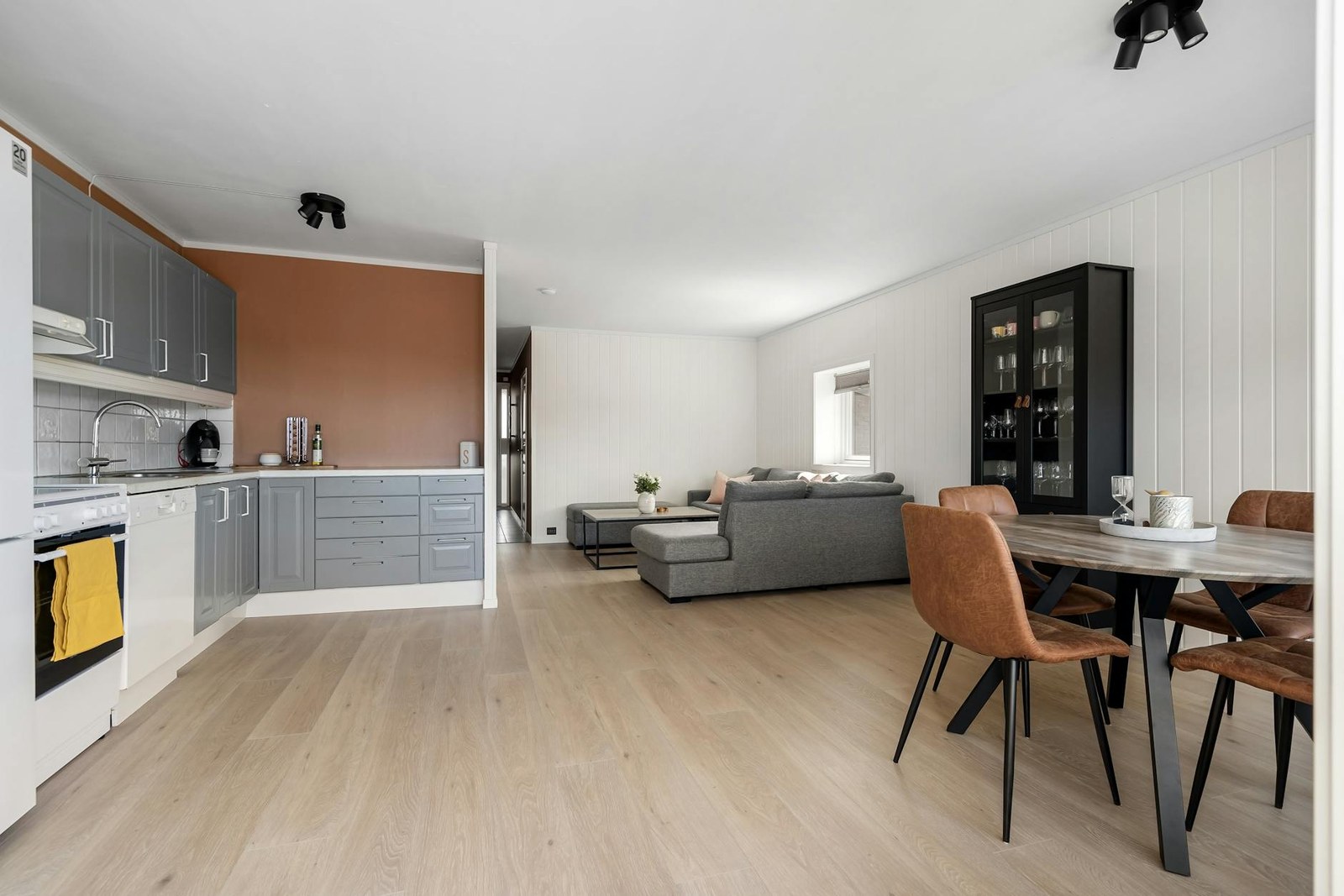
Open-Plan Kitchen vs Closed Kitchen — Which Adds More Value in Adelaide?
The “should we open the wall or keep it closed?” decision is one of the costliest and least-reversible questions in an Adelaide kitchen renovation. Done well, an open-plan conversion can add $40,000 to $90,000 of resale value to the right home; done poorly, it can subtract value, ruin the heritage character of a Federation villa, and leave you living with cooking-smell and acoustic problems for the next twenty years. The right answer depends on the home, the suburb, the household, and the nature of the wall in question.
This guide walks through the resale-value comparison honestly (with the caveats that most articles skip), explains where heritage Adelaide homes are different from new builds, covers the structural cost realities, and presents three Adelaide before-and-after case studies — two opens, one stays closed. Pricing is current to May 2026 and uses HIA, Master Builders SA, Houzz state-of-data, and CoreLogic suburb-level data for the South Australian market.
The honest resale-value comparison
Let’s start with what the data actually says, because the marketing copy on this question is consistently rosier than the reality.
CoreLogic and Domain transaction data in metro Adelaide consistently shows that open-plan kitchen-living-dining configurations attract premium pricing in three categories of home:
- 2010-onward new-builds. Open-plan was the default specification when these homes were built. Buyers expect it and price it accordingly.
- Mid-century brick-veneer homes (1960s-1980s) in family suburbs. Buyers in suburbs like Glenelg, Henley Beach, Mitcham, Modbury, and Brighton expect open-plan family living. A closed kitchen in this stock signals “needs work” to a buyer.
- Contemporary infill homes. Two-storey infills, townhouses, terraces — open-plan is part of the buyer expectation.
The pricing data in those three categories shows open-plan homes selling 4 to 9 per cent above otherwise-comparable closed-kitchen homes, depending on suburb and quality of the open-plan execution.
In two other categories, the data is more nuanced:
- Heritage Federation and Edwardian villas (Burnside, Norwood, Walkerville, Unley, Prospect, Adelaide Hills). Buyers in this stock often value heritage character — high ceilings, separate formal dining, original detailing — and a poorly-executed open-plan conversion that destroys character can subtract value. A well-executed conversion that retains heritage detail at the front of the house and opens only the rear kitchen-family zone tends to add value.
- Premium-tier homes ($2.5m-plus). Above the premium price point, buyer preferences split. Some premium buyers want open-plan; others want separate formal-dining-and-closed-kitchen for entertaining. The data is noisy at the top of the market.
The headline finding: open-plan adds value in roughly 70 per cent of Adelaide stock, has neutral impact on roughly 20 per cent, and actively subtracts value in roughly 10 per cent (mostly heritage homes where the conversion destroys character without adding meaningful function).
Heritage Adelaide vs new builds — the structural difference
The structural cost difference between opening a wall in a heritage villa and opening a wall in a new build is substantial.
New build (1990s onwards)
Most new builds use timber-frame construction with non-load-bearing internal walls. Removing a wall typically involves:
- Engineer assessment to confirm non-load-bearing status — $400 to $800.
- Removal of plasterboard and timber frame — $1,500 to $3,000.
- Re-routing electrical and plumbing services running through the wall — $1,500 to $4,000.
- Patching ceiling, floor, and adjacent walls — $1,500 to $3,000.
- Total wall-removal cost on a non-load-bearing internal wall in a new build: typically $5,000 to $11,000.
If the wall is load-bearing, add a structural beam ($3,500 to $9,000 depending on span and material), structural engineer certification ($1,500 to $3,500), and council building rules consent ($600 to $1,500). Total load-bearing wall removal in a new build: typically $12,000 to $25,000.
Heritage villa (pre-1940s)
Heritage homes are different. Most use double-brick or solid-stone construction. Internal walls are often load-bearing because the construction system distributes load across multiple internal walls rather than concentrating it on a few primary structural elements.
Heritage wall removal typically involves:
- Engineer assessment (more complex than new-build assessment because of the construction system) — $1,200 to $2,500.
- Structural beam to replace the wall’s load capacity — typically $6,000 to $14,000 for a heritage span (longer beams, heavier loads).
- Structural engineer certification — $2,500 to $5,000.
- Removal of double-brick or stone wall (much more labour-intensive than plasterboard-and-timber) — $4,000 to $9,000.
- Re-routing services — $2,000 to $5,000 (heritage homes often have complex service runs in walls).
- Patching ceiling, floor and adjacent walls — $3,000 to $7,000 (more complex repair patterns).
- Council development plan consent if the home is in a heritage character zone — $2,000 to $5,000 plus 8 to 16 weeks of consent timeline.
- Total heritage load-bearing wall removal: typically $20,000 to $48,000.
Heritage homes in character zones (Norwood, Burnside, Walkerville, Unley, Mitcham, Stirling, Aldgate, Hahndorf) have an additional consideration: development plan consent under the heritage overlay. Council can refuse a wall removal that compromises heritage character; consent often requires retaining specific features (a fireplace, a chimney breast, a doorway architrave, original wall detailing).
For the full breakdown of structural and council cost factors, read how much a kitchen renovation costs in Adelaide.
Acoustic and cooking-smell trade-offs
The non-financial trade-offs of open-plan are real and worth assessing honestly:
Acoustic challenges
Open-plan kitchens transmit cooking noise (extraction fan, kitchen tap, dishwasher, food processor, kettle, microwave) directly into the living and dining zones. Households where one person cooks while another works from a laptop in the open-plan dining zone routinely report this as a daily friction point.
Mitigation moves in an open-plan design:
- High-quality rangehood with low-noise exhaust. A premium ducted rangehood at 60 to 65 dB compares to a budget rangehood at 75 to 80 dB. Worth the $400 to $1,200 premium.
- Acoustic ceiling treatment. Acoustic plasterboard or coffered ceiling treatments above the open-plan zone reduce reverberation. Adds $4,000 to $9,000.
- Dishwasher acoustic spec. Premium dishwashers run at 38 to 42 dB; budget dishwashers at 48 to 52 dB. The difference is audible across an open-plan zone.
- Hidden butler’s pantry as the loud-prep zone. The food processor, the noisy task work, the morning coffee machine — all live in the butler’s pantry rather than on the open-plan main bench. Reduces noise transmission significantly.
Cooking-smell challenges
Open-plan layouts allow cooking smells to migrate into living and bedroom zones — fish, garlic, frying oils, curries. Most Adelaide households accept this trade-off, but some don’t.
Mitigation moves:
- Premium rangehood with high extraction rate. 800 to 1,200 cubic metres per hour for a premium ducted rangehood compared to 400 to 600 cubic metres per hour for a budget rangehood. Premium ducted exhaust is essential in open-plan; recirculating rangehoods don’t manage smells in open layouts.
- External duct rather than recirculating. Recirculating rangehoods filter and return the air; ducted rangehoods exhaust it externally. In open-plan, ducted is non-negotiable.
- Door to bedroom zones. The kitchen-living-dining open-plan zone should be separated from bedroom zones with a door (even if it’s usually open). Otherwise cooking smells live in the bedrooms.
What you give up when you go open-plan
Three things that don’t survive an open-plan conversion:
- Quiet TV viewing while someone else cooks. Solvable with high-quality rangehood and dishwasher specs but never fully eliminated.
- Visual messiness control. The kitchen is on permanent display from living and dining. Hidden butler’s pantry mitigates but the main bench can’t permanently look magazine-perfect.
- Formal dining as a separate room. Formal dining merges with the open-plan zone. If you entertain formally and value separate dining, open-plan removes that.
Cost: open-plan conversion vs leaving it closed
A typical Adelaide open-plan conversion adds $15,000 to $50,000 to a kitchen renovation cost on top of the renovation itself, depending on the structural work involved:
- Non-load-bearing wall, new build: $5,000 to $11,000 added.
- Load-bearing wall, new build: $12,000 to $25,000 added.
- Non-load-bearing wall, heritage: $8,000 to $18,000 added.
- Load-bearing wall, heritage with character-zone consent: $20,000 to $48,000 added (plus 8 to 16 weeks of consent timeline).
If you don’t open the wall, the kitchen renovation cost is the renovation itself — typically $25,000 to $58,000 for mid-tier full custom (read the full kitchen renovation cost guide for the cost bands).
The break-even calculation: if open-plan adds 4 to 9 per cent of suburb-median resale value, and the typical Adelaide median is $750,000 to $1,400,000 across the metro, open-plan adds $30,000 to $125,000 to resale. The open-plan conversion typically pays back at sale, but the pay-back is sensitive to the suburb (high suburb-medians repay better) and to the structural cost of the conversion (heritage with consent costs more, repays the same).
For the full ROI analysis, read kitchen renovation return on investment.
Three Adelaide case studies
Case study 1 — Burnside Federation villa, opened to rear
A 1925 Federation villa in Burnside. Original kitchen was a small rear room separated from the formal dining by a load-bearing brick wall. Heritage character zone (Burnside heritage overlay).
Decision: open the rear wall to merge the kitchen with the rear family room. Retain the formal dining room at the front of the house with original ceiling rose, picture rails, and architrave detailing. Retain the chimney breast in what becomes the open-plan kitchen-family zone as a feature.
Cost added by the open-plan conversion: $42,000 (load-bearing brick wall, structural beam, heritage council consent, extensive re-plastering). Total renovation cost: $108,000.
Resale outcome (sold 2026 by previous owner data): sold $310,000 above suburb-comparable closed-kitchen homes. Net gain after the open-plan conversion cost: about $268,000. The conversion repaid heavily because Burnside is a premium suburb where buyer expectations include open-plan family living.
Verdict: open-plan was the right call. The retained heritage features at the front of the house meant character was preserved; the open rear zone delivered the modern family-living function. The home now reads as “best of both” rather than “either-or”.
Case study 2 — Glenelg coastal apartment, opened wall
A 2010 ground-floor apartment in Glenelg. Two-bedroom layout with original plasterboard wall separating a small galley kitchen from the dining-living room.
Decision: remove the non-load-bearing plasterboard wall to open the kitchen to the dining-living zone. New island bench acting as the visual divider between kitchen and dining.
Cost added by the open-plan conversion: $9,500 (non-load-bearing wall in apartment construction). Total renovation cost: $48,000.
Resale outcome (sold 2025 by previous owner data): sold $52,000 above suburb-comparable closed-kitchen apartments. Net gain after the open-plan conversion cost: about $42,500.
Verdict: open-plan was the right call. The apartment buyer pool overwhelmingly expects open-plan layouts; the wall removal cost was modest because the wall was non-structural; the resale repaid the conversion several times over.
Case study 3 — Mitcham 1960s brick veneer, kept closed
A 1965 brick-veneer in Mitcham. Closed kitchen with door and small servery hatch to the formal dining room. Owner considered opening the wall but chose to renovate within the existing closed-kitchen footprint.
Decision: keep the wall closed; renovate within the existing kitchen footprint. New U-shape cabinetry, mid-spec quartz benchtop, replacement appliances. Servery hatch retained but enlarged slightly.
Reasoning: the household had two adults working from home in the dining room (one of whom needed quiet for video calls). Removing the wall would have created daily friction. The closed kitchen also retained the formal dining room’s character.
Cost saved by not opening the wall: approximately $18,000. Total renovation cost: $34,000.
Resale outcome (estimated by local agent feedback): the home will likely sell at suburb-median rather than at a premium. The closed kitchen is a “neutral” rather than a positive at resale; younger buyers might re-do the kitchen to open-plan.
Verdict: keeping it closed was the right call for the owner’s day-to-day life, but cost some resale upside. The owner accepted that trade-off explicitly. Not every renovation should optimise for resale.
The “open-plan with butler’s pantry” middle ground
The most common Adelaide open-plan execution in 2026 is open-plan kitchen-dining-living with a hidden butler’s pantry behind the main kitchen. This solves several open-plan problems at once:
- The main kitchen reads as clean and architectural — generous bench, integrated or stylish appliances, considered lighting. On display from the living and dining zones.
- The butler’s pantry is the actual working second kitchen — secondary sink, food prep, secondary appliances, storage, sometimes laundry. Out of sight from the open-plan zone.
- Cooking smells and noise are partly contained in the butler’s pantry, particularly if the door is partially closed during heavy cooking.
- Visual mess (the dish rack, the spice rack, the kettle, the toaster) lives in the butler’s pantry rather than on the main bench.
The butler’s pantry adds $15,000 to $35,000 to the open-plan project but solves the on-display-permanently problem. For most open-plan briefs in Adelaide, the butler’s pantry is what makes the open-plan work day-to-day. Read the butler’s pantry design ideas guide for layout and sizing options.
When open-plan is the wrong call
Five honest scenarios where Kitchen Fox advises clients to keep the wall closed:
- Heritage villa where the wall to be removed contains original detailing. A wall with an original archway, fireplace, fretwork, or moulded ceiling rose should not be removed. The character loss outweighs the function gain.
- Households where one person works from home with quiet-call requirements. Daily acoustic friction is a permanent cost that often exceeds the resale upside.
- Homes where the kitchen is in a poor location for an open-plan zone. A north-facing kitchen opening into a south-facing living room creates a permanently dim open-plan zone. The room geometry has to support open-plan; not every home does.
- Heritage character zones where council consent is unlikely. If the heritage overlay protects internal layout (rare but exists in some Adelaide character zones), the consent process becomes risky and expensive without a guaranteed positive outcome.
- Households that entertain formally with separate dining. Open-plan removes the separate-dining function. Some households don’t want it removed.
What goes wrong with open-plan kitchens
Five common Adelaide open-plan mistakes:
- Cheap rangehood. Open-plan can’t be done with a budget rangehood. The smell and noise problems become daily resentment.
- No acoustic ceiling treatment. Open-plan rooms reverberate. Untreated acoustic ceilings make the zone feel unfinished, particularly in larger rooms.
- Open-plan without butler’s pantry. Visual mess on permanent display. Most households can’t sustain a magazine-perfect main bench in service.
- Wall removal without considering services. Plumbing, electrical, ducting, and structural cabling often run through the wall being removed. Surprises during demolition cost $3,000 to $15,000 to re-route.
- Open-plan in a small home where the open zone becomes too small. Two small rooms knocked into one slightly-larger room reads as compromised, not generous. Open-plan needs a minimum zone size of about 35 square metres to read as architectural.
A separate consideration for heritage homes opening the rear elevation: mature trees near the build zone often need pruning or removal before cabinetry production begins, so Adelaide tree services work should be scheduled early. Sandstone-character homes also warrant a pre-renovation termite inspection before walls are opened — the structural timber exposed during demolition is the worst time to discover undetected termite damage.
Frequently asked questions
Does open-plan always add value at resale?
No. Open-plan adds value in roughly 70 per cent of Adelaide stock (new builds, family-suburb mid-century homes, contemporary infills) and is neutral or slightly negative in roughly 30 per cent (heritage homes where character is destroyed by the conversion, premium-tier homes where buyer preferences split). The honest answer depends on your suburb and the nature of the wall.
How much does it cost to remove a wall to open up my kitchen?
Non-load-bearing in a new build: $5,000 to $11,000. Load-bearing in a new build: $12,000 to $25,000. Non-load-bearing in a heritage home: $8,000 to $18,000. Load-bearing in a heritage home with character-zone consent: $20,000 to $48,000 plus 8 to 16 weeks of consent timeline. Read more on kitchen renovation costs in Adelaide.
Will my heritage council let me open up the kitchen?
Most metropolitan Adelaide heritage character zones permit internal layout changes if the heritage features at the front of the house are retained (original ceiling roses, picture rails, fireplaces, formal-dining detailing, archways). Some heritage overlays are stricter. The pre-DPC enquiry to your council clarifies the position before you commit; allow 2 to 4 weeks for the response. Listed heritage homes have stricter rules than character-zone homes.
Do I need a structural engineer for an open-plan conversion?
Yes if any wall being removed is load-bearing. The engineer assesses the load path, specifies the replacement beam, and certifies the install. Engineer fees are typically $1,500 to $3,500 for new-build assessments and $2,500 to $5,000 for heritage assessments.
Can I do open-plan without a butler’s pantry?
Yes, but most Adelaide buyers ultimately add one. The butler’s pantry solves the visual-mess and acoustic problems that make open-plan day-to-day frustrating. If your home doesn’t have room for a butler’s pantry, accept the trade-off explicitly. Read the butler’s pantry design ideas guide for sizing.
What’s the smallest room that can be opened to the kitchen as open-plan?
The combined open-plan zone should be at least 35 square metres to read as architectural. Below that, knocking two small rooms into one slightly-larger room reads as compromised. If your potential open-plan zone is below 35 square metres, consider whether the conversion is worth the cost.
How long does an open-plan conversion add to the renovation timeline?
Non-load-bearing wall removal in a new build adds 1 to 2 weeks. Load-bearing wall removal in a new build adds 2 to 4 weeks. Heritage load-bearing wall removal adds 4 to 8 weeks of construction time plus 8 to 16 weeks of council consent if applicable. Plan the consent timeline as a separate sequential block; it doesn’t run concurrent with cabinetry production.
Should I open the wall before or after the kitchen renovation?
In one project. Splitting the wall removal from the kitchen renovation means doing demolition twice, paying for two project mobilisations, and creating service-routing problems. The wall removal and kitchen renovation should be a single coordinated project with a single trades schedule.
Get a free quote to discuss your open-plan kitchen brief with a Kitchen Fox designer.