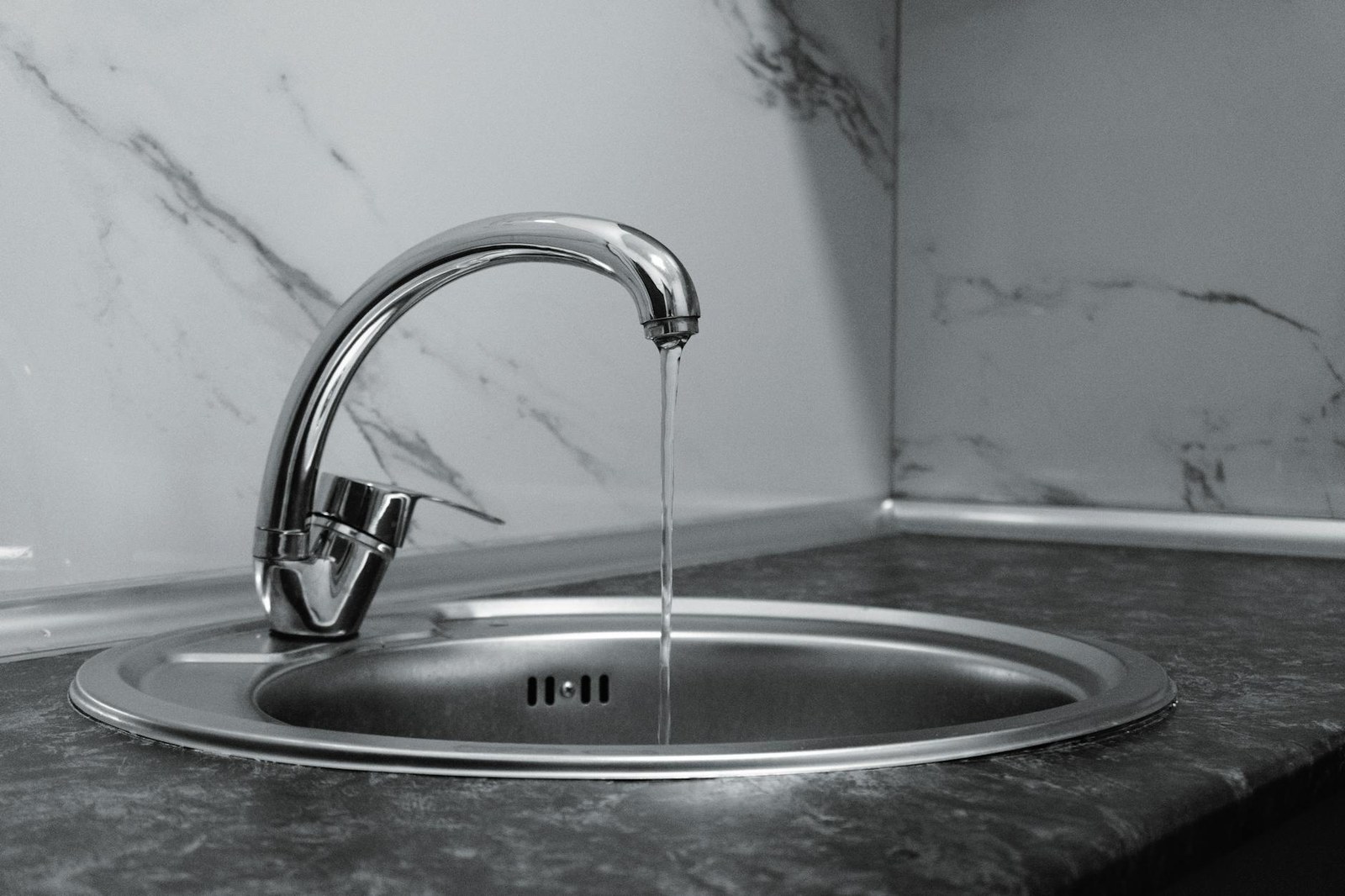
Kitchen Sinks and Tapware — Choosing What Lasts
The sink and the tap are the highest-cycle hardware in any kitchen. Most kitchen renovations under-spec both — the sink is chosen on price and the tap on visual appeal, with little attention to material durability, water-pressure compatibility, mixer type or WELS rating. Three to five years in, a budget tap leaks at the spout, a thin-gauge stainless sink shows scratches, the chrome finish has pitted around the spout, and the kitchen looks tired despite the rest of the renovation holding up. This guide walks the sink and tapware decisions that actually matter — material, configuration, mount type, mixer mechanism, water-pressure realities, and finish durability — with current Adelaide pricing for a 2026 build.
The sink and tap are the daily-touch fixtures of a kitchen. Spend on what cycles thousands of times per year. We brief these decisions at consultation; this is the public version.
Sink material — three serious contenders
Three working materials. Each has a different cost-and-durability profile.
Stainless steel
The volume choice. 90%+ of Adelaide kitchen sinks are stainless. Two specs that matter:
- Gauge. Gauge measures sink-bowl thickness — lower number is thicker steel. 16-gauge (1.6mm) is the premium spec; 18-gauge (1.2mm) is mid-tier; 20-gauge (0.9mm) and thinner is budget. Cheaper sinks dent and ring with kitchen sound; thicker stainless is dimensionally stable and quieter.
- Grade. 304 stainless (the standard kitchen-sink grade) handles water and detergent. 316 stainless (marine-grade) handles salt-air and aggressive chemicals. Coastal Adelaide kitchens (Glenelg, Henley, Brighton) benefit from 316; standard inland kitchens are fine on 304.
Sound-deadening matters. Premium stainless sinks have factory-applied sound-deadening pads on the underside of each bowl. Budget sinks do not — the bowl rings and amplifies tap-water and dishwasher noise.
Cost band: $200 (budget 20-gauge) to $1,800+ (premium 16-gauge double-bowl with sound deadening) for the sink alone, supply only.
Granite composite
A composite of granite particles and acrylic resin. Reads matte stone-like, available in black, charcoal, white and stone colours. Matches stone-bench kitchens visually.
- Strengths: Heat-tolerant (handles hot pots directly); stain-resistant; quieter than stainless; visually integrated with stone bench.
- Weaknesses: Cost premium over stainless; possible chip damage on dropped heavy items; colour fade in some budget brands over 10+ years; chemical sensitivity (avoid bleach and aggressive cleaners).
Cost band: $600-$1,800 supply only.
Fireclay (and other ceramic)
Glazed ceramic, traditionally used in Belfast (farmhouse) sinks. Reads classic, premium, traditional. Suits Hamptons, Provincial and heritage-style kitchens.
- Strengths: Chip-resistant glaze; extremely durable (often outlives the kitchen); heat-tolerant; classic aesthetic; heavy thermal mass keeps water warm during dishwashing.
- Weaknesses: Highest cost option; very heavy (cabinetry must be reinforced — typically 50-80kg empty); apron-front (farmhouse) install requires custom cabinetry; chip-and-replace not feasible (damaged sink replaced as full unit).
Cost band: $900-$3,500 supply only for fireclay; budget enamel-on-cast-iron $400-$900 (degrades faster).
Sink configuration — single vs double vs 1.5 bowl
The configuration is a function of how you wash and what you wash.
Single bowl
One large bowl, typically 600-900mm wide. The volume choice for modern kitchens with dishwashers — the sink handles rinsing, hand-washing of larger items (pots, pans, baking trays), and food prep.
- Pros: Maximum bowl size for the cabinet space; fits large pots and roasting trays; cheapest configuration.
- Cons: No second bowl for separate-task use (e.g., washing on one side, rinsing on the other).
- Best for: Households with a dishwasher (most Adelaide kitchens). The dishwasher does the bulk of the dishwashing; the sink handles oversized items.
Double bowl (equal)
Two equal-sized bowls. Traditional configuration; suits households without a dishwasher or with high pot-and-pan loading.
- Pros: Wash on one side, rinse or stack on the other; flexible for dishwashing routines.
- Cons: Each bowl is smaller than a single-bowl sink — large pots and roasting trays don’t fit cleanly.
- Best for: Households without a dishwasher; serious cooks who hand-wash regularly.
1.5 bowl
A larger main bowl plus a small drainage bowl (typically 200-300mm wide). The drainage bowl handles rinse-and-drain; the main bowl handles the heavy work.
- Pros: Separates heavy bowl from drainage bowl without sacrificing bowl size; fits a typical 800mm cabinet.
- Cons: Mid-range; neither maximum bowl size nor full second bowl.
- Best for: Mid-tier kitchens where the buyer wants some second-bowl utility without a full double-bowl footprint.
Workstation sinks
Premium spec — a single-bowl sink with a flange ledge for accessories (cutting board, drying rack, colander) that slide along the rim. The accessories sit in or above the bowl, freeing bench space.
- Pros: Adds prep functionality without taking bench space; integrated drying-rack and colander; modern visual register.
- Cons: Premium price; accessory storage when not in use; some accessories crack or stain over time.
- Best for: Premium kitchens with limited bench space; modern open-plan kitchens.
Cost band: $1,200-$2,800 for premium workstation sinks.
Mount types — undermount vs top-mount vs flush
Three install configurations.
Undermount
The sink sits below the benchtop, with the bench overhanging the bowl edge. Most premium Adelaide spec.
- Strengths: No raised lip on the bench; easy to wipe debris from bench directly into the bowl; minimal visual edge; modern register.
- Weaknesses: Requires a stone or solid-surface bench (cannot undermount into laminate); install must be precise (badly-installed undermount can sag or leak at the seal); bench overhang collects mould if not silicon-sealed properly.
- Best for: Mid-tier and premium kitchens with stone or porcelain benches.
Top-mount (drop-in)
The sink sits above the benchtop, with a raised lip resting on the bench surface. The volume choice for laminate benches and budget kitchens.
- Strengths: Cheapest install; works with any benchtop material including laminate; tolerates minor measurement variation.
- Weaknesses: Raised lip collects debris; visible bowl-edge profile; less premium aesthetic.
- Best for: Budget and mid-tier kitchens; renovation contexts where the existing bench is laminate.
Flush-mount (rim-flush)
The sink sits with the bowl rim flush with the benchtop surface. Modern minimal aesthetic; falls between undermount and top-mount.
- Strengths: No raised lip; visually flush; works with stone benches.
- Weaknesses: Highest install precision required; cost similar to undermount; not all sink models support flush install.
- Best for: Premium kitchens where the buyer wants the visual of undermount with a slightly different rim detail.
Apron-front (farmhouse)
The front of the sink is exposed below the bench, replacing the cabinetry door panel at the sink position. Heritage and Hamptons aesthetic.
- Strengths: Strong visual statement; deep bowl capacity; works well with fireclay and granite-composite materials.
- Weaknesses: Requires custom cabinetry to host the apron; sink is heavy (especially fireclay); bench install is non-standard.
- Best for: Hamptons, Provincial and heritage-style kitchens.
Mixer types
The tap (mixer) is the most-touched piece of kitchen hardware. The mechanism affects daily ergonomics, durability, and water flow.
Pull-out mixer
The spout pulls out into a flexible hose, allowing the user to direct water onto items in the sink (or beyond). Two spray patterns — aerated (soft) and rinse (high-pressure jet).
- Pros: Extends water flow to where it’s needed; useful for filling pots beyond the sink rim, rinsing the sink, washing large items; rinse-jet handles stuck-on food.
- Cons: Pull-out hose is a wear item — leaks and replacement at 5-15 years; mid-range and premium models retract smoothly, budget models stick or sag.
- Best for: Modern kitchens; the volume Adelaide spec for new builds and renovations.
Articulated (jointed) mixer
A traditional mixer with a swivel spout, no pull-out. Fixed spout reach.
- Pros: Cheapest and simplest mechanism; longest-lasting (fewer wear parts); classic visual register.
- Cons: Spout reach is fixed; cannot direct water onto items beyond the bowl.
- Best for: Hamptons, Provincial and traditional kitchens; second-sink installations (butler’s pantry).
Filtered or 3-way mixer
A mixer with a separate flow channel for filtered water, often via a smaller secondary lever or button. Eliminates a separate filtered-water tap.
- Pros: Single-tap aesthetic; integrated filtered water; saves bench space.
- Cons: Filter cartridge needs replacement (ongoing cost); some 3-way mixers cross-contaminate flow under high mains pressure (specify a quality brand); higher cost.
- Best for: Households that drink filtered water daily; premium kitchens.
Boiling-water and chilled-water mixers
Premium spec — instant boiling water (and sometimes chilled, sparkling) from a separate dedicated tap. Includes an under-sink heating tank.
- Pros: Fast hot drinks; no kettle needed on bench; daily-use convenience.
- Cons: Premium cost ($1,800-$4,500 supply only plus install); annual filter replacement; service and warranty considerations.
- Best for: Premium kitchens, $1.5m+ Adelaide property bands.
Sensor mixers
Touchless or touch-activated mixers. Activate flow with a hand wave or light touch.
- Pros: Hygienic during food prep (no touching with messy hands); modern technology register.
- Cons: Sensor mechanism can fail; relies on battery or hard-wired power; premium cost.
- Best for: Modern premium kitchens; specialist applications (medical or commercial-style residential).
WELS ratings and water-pressure realities
Two technical realities behind every tap choice.
WELS (Water Efficiency Labelling and Standards)
Australia’s mandatory water-efficiency label. Stars rate water-flow efficiency — 6 stars (most efficient) down to 0 stars. Most kitchen mixers rate 4-6 stars; older or commercial-style mixers rate lower.
A 4-star kitchen mixer typically flows at 7.5L/min; a 6-star at 4.5-6L/min. The 6-star is more efficient but feels weaker for filling pots. Most Adelaide buyers settle on 5-star (around 6-7L/min) — efficient but with adequate flow.
Water pressure
Adelaide mains pressure varies by suburb — typically 200-500kPa at the meter. Low-pressure homes (older suburbs, hills, end-of-line) may run 150-250kPa; high-pressure homes 400-500kPa.
- Low-pressure tap. Some imported European tap brands are designed for lower-pressure systems (typical European mains is lower than Australian). On Australian high-pressure mains, these taps may flow excessively or wear faster on internal cartridges.
- High-pressure tap. Most Australian-specified taps work at 200-1,000kPa range. If your home has mains pressure outside this range, a pressure regulator or mains-pressure-rated tap is needed.
Pressure-balancing regulators are inexpensive ($150-$400 supply-and-install) and worth specifying for hills and acreage homes with non-standard pressure profiles.
Tap finish durability
The finish is what fades, scratches, pits or holds up over 10+ years.
Chrome (polished)
The volume choice. Cheap, widely available, classic visual register.
- Pros: Cheapest finish; matches most kitchen styles; easy to clean.
- Cons: Shows water marks and finger marks; can pit over years from cleaning chemicals (bleach, lime-scale remover); least durable in coastal salt-air zones.
- Lifespan in Adelaide: 10-15 years inland, 5-8 years coastal.
Brushed (satin) chrome or stainless
Brushed finish — matte chrome or stainless. More forgiving of finger marks.
- Pros: Modern register; hides finger marks better than polished; durable.
- Cons: Subtle visual difference from chrome at distance; periodic deep clean needed.
- Lifespan: 12-18 years inland, 8-12 years coastal.
Matte black
On-trend modern finish. Powder-coated or PVD-coated finish over brass or stainless.
- Pros: Strong visual statement; hides water marks; pairs with modern cabinetry.
- Cons: Can scratch or chip over years; chemical-cleaner sensitive (avoid bleach); lifespan depends heavily on coating quality (premium PVD coating outlasts powder-coat by 5-10 years).
- Lifespan: 10-15 years on PVD coating; 5-10 years on powder-coat.
Brushed brass / champagne / gold
Premium finish in Hamptons and luxury kitchens. Read butler’s pantry design ideas for the visual context.
- Pros: Strong premium register; ages gracefully (some buyers want patina, others want consistent finish — verify before specifying).
- Cons: Highest cost; premium brands hold finish best (avoid budget brushed-brass which fades or yellows in 3-5 years).
- Lifespan: 15-20 years on premium brand.
Solid brass body
The structural metal beneath the finish matters more than the finish itself. Solid brass body (versus zinc-alloy or budget metal) is the foundation of long-term durability. Specify solid-brass body taps from premium brands; budget zinc-alloy taps fail at the spout junction or cartridge inside 5-7 years.
Coastal Adelaide considerations
Coastal salt-air zones (Glenelg, Henley, Brighton, Aldinga, Sellicks Beach, Victor Harbor) accelerate finish degradation on tapware. Specify:
- 316 stainless or solid brass body — handles salt-air corrosion.
- Brushed finish over polished — hides early-stage corrosion better and lasts longer.
- Avoid budget chrome — pits and corrodes inside 5 years coastal.
The cost premium for coastal-rated tapware is typically $500-$1,500 over standard chrome — pays back over the kitchen lifecycle. Read our locations guide for Glenelg for the coastal context.
Linking to the rest of the kitchen renovation
Sink and tapware decisions tie into:
- Bench material — read stone benchtops buyer’s guide for the bench context. Undermount sinks require a stone, porcelain or solid-surface bench. Top-mount works with laminate.
- Splashback finish — read kitchen splashback materials guide for the surround context. Tap finish should coordinate with splashback finish — brushed brass tap with subway-tile and brass-rim mirror works; matte black tap with white subway tile reads modern.
- Lighting — read kitchen lighting design for under-cabinet LED context. Polished tap finishes catch light differently from matte and brushed finishes.
- Renovation budget — read kitchen renovation cost guide. Sink and tapware total typically runs 4-8% of the renovation budget — premium spec is well-spent given daily-touch frequency.
Frequently asked questions
How much should I spend on a kitchen sink and tap in Adelaide?
For a mid-tier kitchen renovation, expect $1,200-$2,500 total for the sink and tap (supply only, premium brand, mid-spec). Budget kitchens go down to $500-$900 total; premium kitchens with workstation sink and 3-way mixer go to $4,000-$8,000+.
Stainless or granite-composite sink?
Stainless is the volume choice — durable, repairable, widely available, price-flexible. Granite-composite is a stylistic match for stone-bench kitchens with a slight premium and modest durability premium. Either is fine for most Adelaide kitchens; budget tilts toward stainless.
Single bowl or double bowl?
Single bowl for households with a dishwasher (most modern kitchens). Double bowl or 1.5 bowl for households without a dishwasher or with high hand-washing volumes. The single-bowl trend is winning in modern Adelaide builds.
Should I get a pull-out mixer?
The volume choice in modern Adelaide kitchens. Pull-out hose adds daily-use flexibility (rinsing the bowl, filling pots, washing large items). Specify a premium-brand pull-out for the longest hose-mechanism life.
What tap finish lasts longest in Adelaide?
Brushed stainless or premium PVD-coated matte black for inland kitchens — 12-18 years. Premium brushed brass on solid-brass body for premium kitchens — 15-20 years. For coastal kitchens — 316 stainless body with brushed finish.
Do I need a filter on the kitchen tap?
Optional. A 3-way mixer or under-sink filter unit handles the household drinking-water need. Filter cost typically $200-$600 supply plus annual filter replacement. Most Adelaide households don’t filter mains tap water; the filter is a preference rather than necessity.
Can I have an undermount sink with a laminate benchtop?
Generally no. Undermount sinks attach to the underside of a stone, porcelain or solid-surface bench. Laminate cannot host an undermount install (the laminate edge would water-damage). Top-mount or flush-mount is the laminate option.
What’s the most common sink and tap regret?
Specifying budget chrome on a budget zinc-alloy body. The finish pits, the cartridge fails, and the tap looks tired inside 3-5 years despite the rest of the kitchen holding up. Spend on a premium-brand tap with solid-brass body — it’s the highest-cycle hardware in the kitchen and pays back in lifespan.
Get a free kitchen renovation quote — or read our kitchen renovation cost guide for the full project budget context.