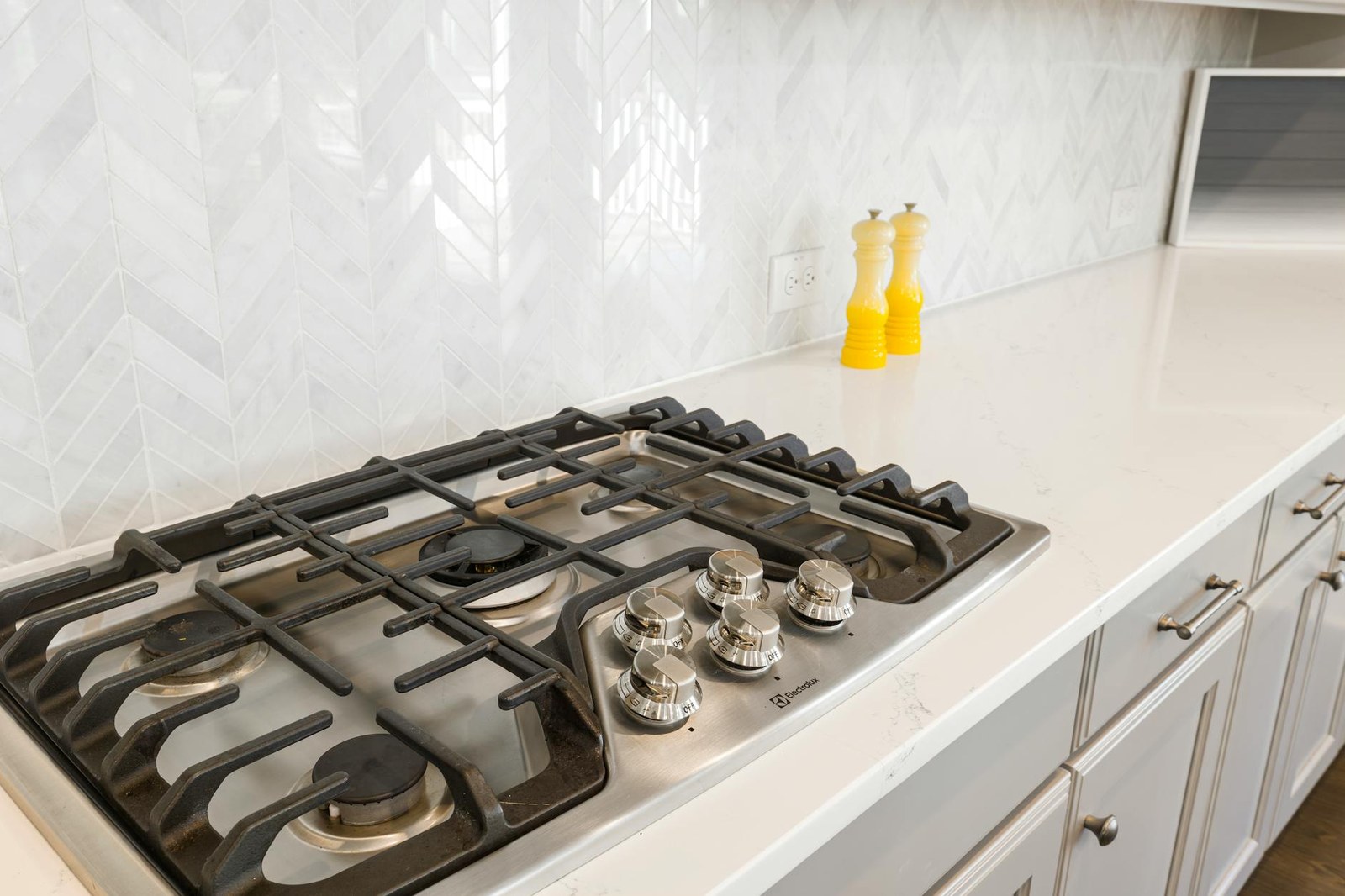
Hamptons Kitchens in Adelaide: A Working Style Guide
A Hamptons kitchen is the most-requested style in Adelaide right now. Done well, it reads as classic, generous, and quietly expensive. Done poorly — and a lot of Adelaide Hamptons kitchens are done poorly — it reads as a builder-spec white kitchen with the wrong handles. The difference comes down to five details: the cabinetry door profile, the benchtop choice, the hardware finish, the lighting, and how the brief adapts to the actual house.
This guide covers each of those five details in working terms. It defines the Hamptons palette, walks through the cabinetry profiles that earn the label, explains why marble and timber matter more than colour, and shows three Adelaide adaptations of Hamptons style — heritage villa, coastal new-build, and Hills cottage — so you can see what the brief looks like across different homes. Pricing is current to May 2026 and uses HIA, Master Builders SA and Houzz state-of-data ranges for the South Australian market.
What “Hamptons” actually means
Hamptons kitchen design borrows from the American beachside coastal homes of Long Island — generous, light-filled, formal-but-relaxed, and built with materials that age well. In Australia, the style has been adapted to a slightly warmer palette and a less formal silhouette, but the underlying rules are the same.
A working Hamptons kitchen has:
- A predominantly white or off-white cabinetry palette, with a contrast island in deeper navy, sage, taupe, or stone-grey.
- Shaker, panelled, or inset cabinetry — never flat-panel, never high-gloss.
- Stone benchtops with visible veining — natural marble, quartz that mimics marble, or porcelain reproductions.
- Brass, polished nickel, or aged-bronze hardware. Never matte black, never chrome.
- A trio or pair of pendant lights over the island, usually in glass, brass, or rattan.
- Generous internal storage — pull-outs, walk-in pantries, drawer banks rather than fixed shelves.
What separates a real Hamptons kitchen from a Hamptons-look kitchen is the cabinetry profile and the benchtop slab. A flat-panel white kitchen with brushed nickel handles is not Hamptons — it’s a contemporary kitchen wearing Hamptons accessories.
The palette — getting the white right
White is the foundation of a Hamptons kitchen, but white is not one colour. The palette runs from cool whites with a blue undertone (right for coastal homes with strong daylight) to warm whites with a yellow or pink undertone (right for heritage homes with warmer interior light).
The four working Hamptons whites:
- Crisp coastal white — closest to pure white, slight blue undertone. Reads cleanly under bright daylight. Strongest in coastal homes (Glenelg, Henley Beach, Brighton) where the natural light is high-temperature.
- Warm linen — off-white with a soft yellow or beige undertone. Reads as restful and slightly aged. Strongest in heritage villas (Burnside, Norwood, Walkerville) where interior light is warmer.
- Soft chalk — neutral white with a hint of grey. Reads as architectural without going cold. Works in modern new-builds and renovated mid-century homes.
- Putty cream — warm cream with body. Reads as Italian-villa rather than Hamptons-pure, but earns its place where the home has heavy timber floors or strong stone fireplaces.
A Hamptons kitchen typically pairs two whites — a slightly warmer wall cabinet against a slightly cooler island, or vice versa. The contrast is small but the depth it adds is real.
For the contrast island, the dominant choices in Adelaide right now are:
- Hamptons navy — deep blue with a hint of green, never flat. Pairs with brass or polished nickel hardware.
- Sage green — soft, dusty green. Pairs with brushed brass or aged bronze.
- Forest green — deeper, richer green than sage. Reads more masculine, pairs with antique brass.
- Stone grey — warm grey with a slight green undertone. Pairs with polished nickel.
- Bone or taupe — barely-there contrast for purists. Pairs with brushed brass.
The contrast island is Hamptons’ signature move, but it’s not mandatory. An all-white Hamptons kitchen reads as more traditional and works particularly well in smaller heritage cottages where a contrast island would crowd the room.
Cabinetry — the profile is the style
The single decision that separates a real Hamptons kitchen from a Hamptons-look kitchen is the cabinetry door profile. Hamptons door profiles are framed — meaning the door has a visible inner panel surrounded by a border. The three working profiles are:
- Shaker — five-piece construction, flat centre panel, square inner edges. The plainest of the framed profiles, suits modern coastal Hamptons.
- Panelled (or “inset panel”) — five-piece construction, flat or beaded centre panel, profiled inner edges. Slightly more formal than shaker, suits heritage adaptations.
- Beaded inset — five-piece construction with a beaded inner detail and the door sitting flush within the cabinetry frame rather than overlaying it. The most formal and most expensive profile, only used on premium custom Hamptons builds.
A two-pack painted finish on plain MDF is the Adelaide standard for Hamptons cabinetry. Premium custom builds use a paint-on-timber finish, which costs about 30 to 40 per cent more but ages better and resists moisture damage in coastal homes.
What’s not Hamptons:
- Flat-panel doors — these are contemporary, not Hamptons.
- Slab doors — these are modern minimalist.
- High-gloss finishes — wrong era.
- Open shelving as the dominant storage — Hamptons prefers concealed storage with the occasional open feature shelf.
For the cabinetry build itself, the standard Adelaide spec is:
- E0 emissions-rated Australian-made carcass board.
- Hettich or Blum hinges and drawer runners with full soft-close.
- Internal pull-outs, magic corners, and drawer banks rather than fixed shelves.
- 36 mm or 40 mm benchtop overhang on the island for a generous waterfall or square-edge profile.
Benchtops — marble or marble-look
A Hamptons kitchen benchtop is white with grey or warm-vein veining. The four working materials are:
- Natural marble (Carrara, Calacatta) — the original. Visually unmatched, but stains, etches, and scratches. Suits households that accept the patina; not for heavy-use family kitchens. $400 to $1,500 per square metre installed.
- Premium quartz with marble veining — engineered quartz reproductions of Calacatta or Carrara. Stain and scratch resistant, doesn’t etch. The mainstream Adelaide Hamptons spec. Note the engineered-stone ban from 1 July 2024 has shifted the available range — only low-silica engineered stone is now legal to fabricate. $250 to $700 per square metre installed.
- Porcelain slab with marble veining — sintered stone (Dekton, Neolith) with marble-look. Heat, scratch, and UV resistant. Increasingly competitive on price since the engineered-stone reformulations. $400 to $1,200 per square metre installed.
- Reconstituted marble — granular natural marble in a polymer binder. Looks more natural than quartz, costs less than premium quartz. $300 to $800 per square metre installed.
The current Adelaide Hamptons default in 2026 is a low-silica engineered quartz with Calacatta-style veining — visually close to natural marble, stain-resistant, and within the band most homeowners can afford. Read the stone benchtops buyer’s guide for the full breakdown of materials and the engineered-stone ban implications.
A Hamptons benchtop wants a generous edge profile — a 40 mm square edge or a waterfall island in the same slab. Thin 20 mm benches read as contemporary, not Hamptons.
Hardware — brass earns the label
The hardware finish is the second-biggest decision after the door profile. Hamptons hardware is metallic and warm. The four legitimate finishes are:
- Polished brass — bright, traditional, polished-mirror finish. Suits formal Hamptons, heritage interiors.
- Brushed brass — warm matte gold. The current Adelaide default. Works across Hamptons, modern, and provincial.
- Aged or antique bronze — darker, almost-black with bronze highlights. Suits Hills cottage and heavier-timber Hamptons adaptations.
- Polished nickel — bright, slightly cool silver. Suits cooler-palette Hamptons, especially with crisp coastal white cabinetry.
What’s not Hamptons hardware:
- Matte black — wrong era. Reads as industrial-modern.
- Chrome — too cold, too commercial.
- Champagne gold or rose gold — wrong tone, reads as builder-spec contemporary.
Cabinet handles in a Hamptons kitchen are typically 96 mm to 128 mm cup pulls (concave handles that you grip from underneath) on drawers, paired with knobs on doors. The cup-pull-and-knob combination is a Hamptons signature — it telegraphs the era the style references.
Tapware follows the same finish as the cabinetry hardware, with one caveat: tapware in brass or nickel must be specified as “lifetime PVD coated” or solid brass to survive Adelaide hard water. Cheap brass-coloured tapware will discolour within 18 months. Read more about kitchen sinks and tapware that lasts.
Lighting — the pendant trio
Hamptons lighting is layered and generous. A working Hamptons lighting plan has:
- A pendant trio over the island — three matched pendants, typically glass or brass. The trio is the Hamptons signature; a single pendant or a pair reads as too contemporary.
- Recessed downlights on a separate dimmable circuit for ambient lighting.
- Under-cabinet warm LED strip for task lighting on the bench.
- A statement light over the dining area if the kitchen is part of an open-plan space — typically a chandelier or large pendant in the same family as the island trio.
The pendant trio sizing matters. The bottom of each pendant should sit 70 to 80 cm above the benchtop — high enough to clear sightlines, low enough to feel intimate. The pendants should be evenly spaced along the island, with the outer pendants at least 30 cm in from each end.
Read the full breakdown of kitchen lighting design for layered lighting plans across all kitchen styles.
Three Adelaide Hamptons adaptations
Adaptation 1 — Burnside heritage villa
A 1925 Federation villa with high ceilings, tessellated tile entry, and original timber floors. The kitchen sits at the rear of the house, opening onto a north-facing courtyard.
Brief: maintain the heritage character of the front of the house; deliver a working Hamptons kitchen at the rear. Remove the existing 1990s kitchen and replace with full custom cabinetry and a butler’s pantry behind.
Spec: warm linen cabinetry (slightly warmer wall cabinets, slightly cooler island in Hamptons navy), Calacatta-look low-silica engineered quartz benchtop with 40 mm square edge and waterfall island, panelled door profile with beaded detail on the island, brushed brass hardware (cup pulls + knobs), oak floor stained slightly darker than the existing hallway, pendant trio in clear glass with brass cradles.
Why it works: the warmer linen ties to the original timber detailing throughout the rest of the house. The navy island reads as period-appropriate. The brass hardware sits comfortably alongside the original brass door furniture.
Cost band: $58,000 to $72,000 (full custom cabinetry plus butler’s pantry).
For heritage villas where the rear of the home is opened up to accommodate the new kitchen and butler’s pantry, mature trees in the rear yard often need pruning or removal to clear trades access during the build — book Adelaide tree services before the cabinetry production phase begins, not during install.
Adaptation 2 — Henley Beach coastal new-build
A 2018 four-bedroom new-build on a coastal block, north-facing aspect, large open-plan living-dining-kitchen with sliding doors to the alfresco area.
Brief: lift the builder-spec kitchen to a Hamptons coastal spec. Strong daylight, beach-house relaxed feel, generous island for entertaining.
Spec: crisp coastal white wall cabinetry with sage green island, premium porcelain slab benchtop in Calacatta-style with 40 mm square edge and waterfall island, shaker door profile, polished nickel hardware (cup pulls + knobs), full-height stone splashback, pendant trio in clear seeded glass with polished nickel cradles, white oak floor.
Why it works: the cooler crisp coastal white reads correctly under strong coastal daylight. The sage green island softens the formal Hamptons rules to fit the beach-house relaxed register. The polished nickel suits the cooler palette better than warm brass would.
Cost band: $42,000 to $54,000 (mid-tier full renovation, no structural change).
Adaptation 3 — Stirling Hills cottage
A 1910s sandstone cottage in Stirling, lower ceilings, smaller footprint, original chimney breast in the kitchen.
Brief: Hamptons style adapted to a smaller cottage footprint. Retain the chimney breast as a feature; integrate a freestanding range cooker; deliver storage in a tight U-shape layout.
Spec: putty cream cabinetry (warmer to suit the cottage aesthetic), reconstituted marble benchtop with 30 mm square edge, beaded inset door profile (the cottage suits the more formal profile because the room is smaller), aged bronze hardware (cup pulls + knobs), freestanding range cooker in cream enamel, single oversized pendant in seeded glass and aged bronze rather than a trio (the room is too narrow for a trio).
Why it works: the warmer putty cream reads correctly against the sandstone and timber detailing of the original cottage. The aged bronze hardware suits the era of the cottage. The single oversized pendant works in a smaller room where a trio would feel cramped.
Cost band: $32,000 to $44,000 (mid-tier renovation, no structural change).
Costs vs full-classic Hamptons
A “full classic” Hamptons kitchen — natural Carrara marble, paint-on-timber cabinetry, beaded inset doors, polished brass hardware, three matched glass pendants, butler’s pantry, and integrated appliances — runs from $85,000 to $140,000 in Adelaide. That’s the premium tier.
The mainstream Adelaide Hamptons spec — low-silica engineered quartz, two-pack on plain MDF, shaker doors, brushed brass hardware, three matched pendants, and a pull-out pantry rather than a butler’s pantry — runs from $42,000 to $68,000. That’s where most Adelaide Hamptons buyers land.
The entry-tier Hamptons spec — laminate or reconstituted marble bench, two-pack on plain MDF with shaker doors, basic brass hardware, two pendants over the island — runs from $25,000 to $38,000. It reads as Hamptons-look rather than Hamptons-real, but on a tight budget it’s a credible option.
For the full cost-band breakdown, read how much a kitchen renovation costs in Adelaide. For the contractor-vetting process, read how to find a kitchen renovation contractor you can trust.
What goes wrong with Hamptons kitchens in Adelaide
Five common Adelaide Hamptons mistakes:
- Flat-panel doors with cup-pull handles. This is the most common mistake. The handles say Hamptons; the doors say contemporary. The two don’t reconcile.
- Pure white-on-white with no contrast. Without a contrast island or a contrast handle finish, the kitchen reads as builder-spec.
- Wrong tapware finish. Chrome tapware on a Hamptons kitchen is the giveaway. Brass or polished nickel earns the label.
- Over-busy benchtop veining. Heavy contrast Calacatta-style veining can dominate a small kitchen. In a tight footprint, choose subtler Carrara-style veining.
- Single-pendant lighting on a long island. A long island wants a pendant trio. A single pendant reads as undercommitted.
Frequently asked questions
Are Hamptons kitchens still in style for 2026?
Yes. Hamptons kitchen design has been the dominant Adelaide renovation style since 2016 and shows no sign of softening. Industry pattern data from Houzz and HIA confirms it remains the most-requested style brief in South Australia, ahead of modern handleless and French provincial.
What’s the cheapest a Hamptons kitchen can cost?
The honest entry tier for a Hamptons-look kitchen in Adelaide is about $25,000 — laminate or basic reconstituted marble bench, two-pack on plain MDF with shaker doors, basic brass hardware. Below that, you’re cutting cabinetry quality to a level where the kitchen won’t last. The full cost breakdown is in our kitchen renovation cost guide.
Can a Hamptons kitchen work in a small space?
Yes, with adaptations. Drop the contrast island in favour of all-white, swap the pendant trio for a single oversized pendant, and use the more formal beaded inset door profile to add visual depth in a small room. The Stirling cottage example above is a working small-space Hamptons kitchen.
What’s the difference between Hamptons and modern coastal style?
Modern coastal kitchens use flat-panel cabinetry, matte black or champagne gold hardware, and quartz or porcelain benchtops with subtle or no veining. Hamptons kitchens use shaker or panelled cabinetry, brass or nickel hardware, and benchtops with visible veining. The two share a coastal palette but differ entirely in cabinetry profile and hardware era.
Can I get a Hamptons-style butler’s pantry?
Yes — and a butler’s pantry suits Hamptons style particularly well, since the original Hamptons homes had a separate scullery. Read the butler’s pantry design ideas guide for layout options and sizing.
Is brass hardware durable in Adelaide’s hard water?
Solid brass and PVD-coated brass survive Adelaide hard water indefinitely. Cheap brass-coloured plate (brass-look powder coat or thin electroplating) discolours within 12 to 18 months. Specify solid brass or lifetime PVD coating on tapware, and check that cabinetry hardware is solid brass (it usually is, even on mid-tier Adelaide spec).
Do I need a designer for a Hamptons kitchen?
Yes. Hamptons style is detail-driven — door profile, hardware finish, benchtop slab, pendant sizing, palette pairing — and the difference between a real Hamptons kitchen and a Hamptons-look kitchen lives in those details. A designer who has built Hamptons kitchens before will save you the cost of a do-over within the first year.
Get a free quote to discuss your Hamptons kitchen brief with a Kitchen Fox designer.