Flat Pack Kitchens in Adelaide — When They Work and When to Walk Away
A flat-pack kitchen — bought as boxed components from IKEA, Kaboodle, Bunnings or a similar retailer — looks dramatically cheaper on the showroom price tag than a custom-built Adelaide kitchen. The headline figure (“$3,500 for a complete kitchen”) is real for the boxes, but it’s not the install-ready cost of a finished kitchen. Once you add benchtops, splashbacks, appliances, the hidden trim and panel work, professional install, plumbing, electrical and trim-out, the realistic delivered cost of a flat-pack kitchen in Adelaide is $11,000 to $22,000 for a small to mid-size footprint.
That price is genuinely lower than custom — by around $4,000 to $12,000 on the same footprint. The savings are real. So is the trade-off: shorter cabinetry lifespan, less flexibility for non-square walls, generic-spec hardware, and a final result that reads as “good budget kitchen” rather than “renovated kitchen” in listing photography or buyer walk-throughs.
This guide is the honest version. What’s actually in a flat-pack box, what costs are routinely missed, when flat-pack works and when custom is the better-value buy, brand-by-brand comparison of the three Adelaide-available options, and how Kitchen Fox handles flat-pack installs when that’s what makes sense for the homeowner.
What’s actually in a flat-pack box
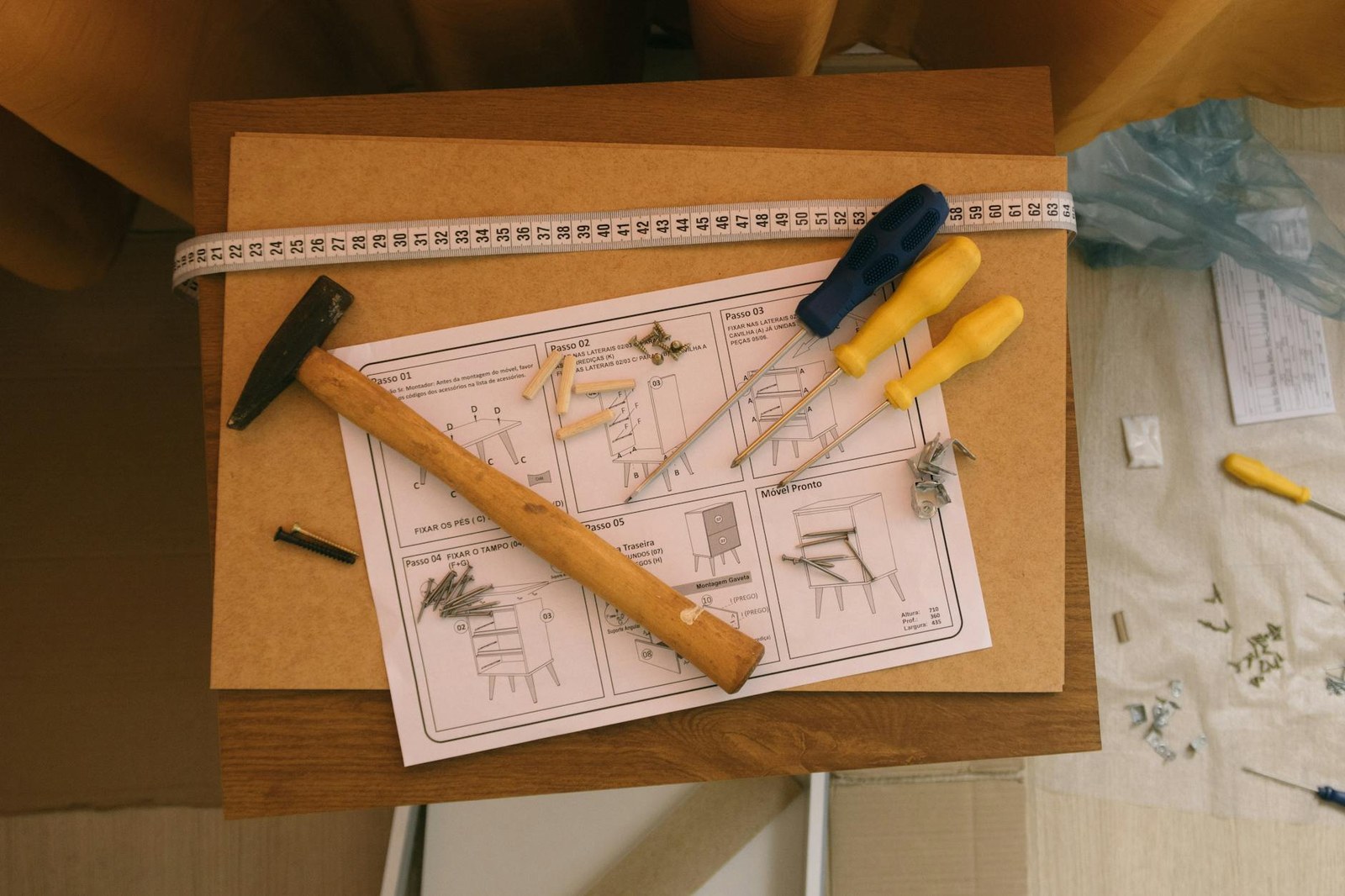
A flat-pack kitchen is a kit of parts. Each box contains the unassembled components for one cabinet — typically the carcass panels (sides, top, bottom, back, shelf), pre-drilled for assembly, packed flat, with hardware in a separate bag. Doors, drawer fronts and handles arrive separately and are assembled onto the carcasses.
What’s typically included with the cabinetry:
- Carcass panels (melamine or laminated MDF).
- Pre-drilled holes for hinges, runners and fittings.
- Self-adhesive edge strips on visible edges.
- Cam-and-dowel fittings or screw fittings for assembly.
- Hinges and drawer runners (often generic, sometimes branded).
- Door panels and drawer fronts.
- Adjustable feet (most modern flat-pack uses leg-and-clip kicker rather than fixed plinth).
What’s typically not included (and is bought separately):
- Bench-tops. Usually a separate purchase. Laminate is the cheapest option; quartz or stone is brought in from a third-party supplier and sized to the cabinet layout.
- Splashbacks. Glass, tile or laminate splashback supply and install is a separate trade.
- Appliances. Cooktop, oven, rangehood, dishwasher, sink and tapware — all separate.
- Trim and panel work. End-cap panels, infill panels, scribes against non-square walls, kicker corners — much of this is missed in the headline flat-pack price.
- Cornice and pelmets. Decorative trim above and below the upper cabinets.
- Internal hardware upgrades. Pull-out pantries, magic corners, soft-close upgrades, drawer organisers.
- Lighting. Under-cabinet LED, pendants, switching.
- Plumbing. Sink connection, dishwasher connection, water filter, gas if applicable.
- Electrical. Power circuits, oven hardwiring, cooktop wiring, lighting circuits.
- Demolition. Removing the existing kitchen.
- Disposal. Old cabinetry, old benchtop, old appliances.
- Project coordination. Booking trades, sequencing the work, keeping the project to schedule.
- Install labour. Assembly, hanging, levelling, alignment.
The headline flat-pack price typically covers 40 to 60 percent of the realistic finished-kitchen cost. The other 40 to 60 percent — the “hidden” costs — is where flat-pack budgets blow out for first-time buyers.
The realistic delivered cost of a flat-pack kitchen in Adelaide
For a 5 to 8 metre kitchen footprint (small to mid-size, the common Adelaide flat-pack scope), here’s the line-item breakdown in 2026 dollars:
| Line item | Cost range |
|---|---|
| Cabinetry (boxed, retailer cost) | $3,500 - $8,000 |
| Bench-top (laminate or budget quartz, supply and install) | $1,500 - $5,500 |
| Splashback (tile, glass or laminate, supply and install) | $700 - $2,500 |
| Sink and tapware | $400 - $1,400 |
| Appliances (oven, cooktop, rangehood, dishwasher) | $2,500 - $6,000 |
| Trim, panels, scribes, cornice | $400 - $1,200 |
| Demolition and disposal | $700 - $1,800 |
| Plumbing (licensed) | $1,200 - $2,800 |
| Electrical (licensed) | $1,200 - $2,800 |
| Lighting | $200 - $700 |
| Install labour (professional) | $2,000 - $5,500 |
| Project coordination | $0 - $2,500 (DIY-managed or contractor-managed) |
| Total — DIY-managed | $11,300 - $34,200 |
| Total — contractor-managed | $13,800 - $36,700 |
The savings against a custom kitchen at the same scope (band 2, $20,000 to $35,000 typical) are real: typically $4,000 to $12,000 on a small to mid-size kitchen. But the savings are smaller than the showroom price tag suggests — and the lifespan of the flat-pack kitchen is shorter, so the cost-per-year of ownership often equalises over a 10 to 15 year horizon.
For comparison with full custom pricing, read the kitchen renovation cost guide.
When flat-pack works
Flat-pack delivers strong value when these conditions are present:
The kitchen is a rental upgrade or short-hold investment
Investment properties on a five-year hold horizon don’t reward premium cabinetry. A flat-pack kitchen at $14,000 delivers a finished, tenant-ready kitchen at the lowest practical cost. Lifespan considerations matter less when the property is being held for the cycle rather than long-term occupancy.
The kitchen is in a sub-$700k owner-occupier home
In entry-level segments where the home’s price ceiling is firm, over-spec on cabinetry is wasted. A well-installed flat-pack kitchen presents as “renovated” in the listing photography and recovers most of its cost at sale. The marginal recovery from upgrading to custom is small in this segment.
The footprint is small and the layout is genuinely square
Flat-pack works best when the kitchen layout is simple — a galley, a single-wall, a small L-shape — and the walls are square enough that the standard 600mm and 900mm cabinet widths fit cleanly. Heritage homes with non-square walls and odd-dimension wall runs need infill panels and scribed end caps that flat-pack systems don’t handle well.
The owner is hands-on and time-rich
A DIY-installed flat-pack kitchen saves $2,500 to $5,500 against a professional install. The trade-off: 80 to 140 hours of owner time across assembly, hanging, alignment, levelling and finishing. For owners who enjoy the work and have the tools, the dollar savings are real. For owners outsourcing the install anyway, the savings disappear.
The owner accepts the lifespan trade
Flat-pack carcass and hardware lifespan averages 8 to 12 years before noticeable failure (hinges loosening, drawer runners stiffening, melamine edges chipping, doors warping). Custom cabinetry averages 18 to 25 years on the same metrics. Owners staying long-term should weigh the lifetime cost; owners on a 5 to 10 year horizon won’t see the difference.
When custom beats flat-pack
The conditions where custom delivers better value despite the higher up-front cost:
The home is in a $900k+ segment
In segments where buyers expect renovated kitchens as standard, flat-pack reads as “budget renovation” in inspections and listing photography. The recovery rate on flat-pack in premium stock drops sharply — sometimes below 50 percent against a comparable custom renovation. Read the renovation ROI analysis for the segment-specific numbers.
The kitchen has heritage features or non-square walls
Heritage Adelaide stock — pre-1940s villas, semis and bungalows — has walls that aren’t square, ceilings that aren’t level, and floor heights that vary by 20 to 50mm across a single room. Flat-pack systems use fixed cabinet widths (300, 450, 600, 900mm) that need infill panels to fill the gaps in non-square footprints. The result is visible scribing, mismatched panels and non-aligned door reveals. Custom cabinetry made-to-measure handles non-square walls cleanly.
You need non-standard storage
Pull-out pantries, magic corners, internal drawer organisers, soft-close upgrades on every cabinet — the internal storage that makes a kitchen genuinely functional — is available in flat-pack systems but at premium cost-per-feature. The cumulative cost of upgrading every internal storage element on a flat-pack kitchen often exceeds the premium for custom. Read the cabinet maker vs joiner breakdown for the spec language.
The budget allows custom
If your budget supports band 2 ($25k-$45k) or above for the kitchen scope, custom is the better buy. The $4,000 to $8,000 saving on flat-pack against custom in this band is small relative to the lifecycle cost difference — and the visual outcome of custom is clearly better in person.
You’re staying long-term
Owners staying in the home for 10+ years pay the lifecycle cost of flat-pack twice — once for the original install, again for the inevitable replacement at year 10 to 12. Custom cabinetry typically reaches 18 to 25 years before replacement is needed.
IKEA vs Kaboodle vs Bunnings — what the Adelaide buyer actually gets
The three flat-pack systems available in Adelaide differ on quality, system depth and install logistics. Here’s the honest comparison.
IKEA (Metod system)
The most established system, with the deepest internal storage range. The Metod system uses a rail-and-frame mounting that’s faster than traditional fixing on flat walls. Cabinets are 600mm depth standard with 800mm uppers (taller than most Australian custom) — kitchens read taller and more dramatic.
Strengths:
- Deep internal-storage range (Maximera drawers, Utrusta hardware, integrated lighting).
- Soft-close hinges and runners standard on most cabinet specifications.
- Long warranty (25 years on cabinets, 5 years on hinges).
- Predictable pricing — what’s on the website is what you pay, no surprises.
- Strong online and in-store planning tools.
Weaknesses:
- 600mm cabinet depth is non-standard for Australian benchtop suppliers. Most local stone fabricators charge a premium for non-standard offcuts and waste.
- Limited door range — ranges go in and out of stock and discontinue regularly. A kitchen built today may be hard to add to in 5 years.
- Cabinet widths come in metric increments that don’t always align with Australian electrical and plumbing standard layouts.
- Adelaide IKEA store delivery and click-and-collect logistics need 3 to 4 weeks lead time.
Realistic delivered cost for a 7m IKEA kitchen in Adelaide: $13,500 to $26,000 finished.
Best for: design-led owners who like the IKEA aesthetic, are comfortable with the system limitations, and value the warranty depth.
Kaboodle (Bunnings-owned)
Australian-designed, sold through Bunnings, with cabinet widths and depths that match Australian stock. The system is designed to integrate with Australian benchtops, appliances and trades.
Strengths:
- Australian-standard cabinet sizes (450mm depth, 720mm height) — bench-tops, appliances and trim integrate cleanly.
- Reasonable internal storage range, including pull-out pantries and magic corners.
- Two-pack and laminate door range is broad and reasonably stable across product cycles.
- Bunnings install network — they’ll connect you with local Adelaide installers.
- Purchase logistics simple — buy at Bunnings, take home that day or arrange delivery.
Weaknesses:
- Hardware is generic (own-brand, not Hettich/Blum/Salice). Soft-close lifespan is shorter than on premium hardware.
- Door finish quality is mid-spec — visible against premium two-pack from a custom shop in side-by-side.
- Limited customisation — non-standard widths and corner solutions are constrained to system options.
Realistic delivered cost for a 7m Kaboodle kitchen in Adelaide: $12,000 to $24,000 finished.
Best for: standard-spec mid-tier renovations on rental properties or sub-$800k owner-occupier homes where the system constraints aren’t visible.
Bunnings (own-brand modular range)
The cheapest of the three. Cabinetry quality below Kaboodle. Comes in fewer sizes, fewer finishes, less internal storage variety. Door range tends to be off-the-shelf laminate.
Strengths:
- Cheapest of the three by a clear margin.
- Available immediately from any Bunnings.
- Suitable for budget rental upgrades, granny flats, garage-conversion kitchens.
Weaknesses:
- Hardware is bottom-tier. Realistic lifespan 6 to 10 years before notable failure.
- Door finish quality is visibly cheaper than Kaboodle or IKEA.
- Internal storage range is minimal.
- Reads as cheap in listing photography and buyer walk-throughs.
Realistic delivered cost for a 7m Bunnings kitchen in Adelaide: $9,500 to $18,000 finished.
Best for: budget rental upgrades and very entry-level owner-occupier work where the price ceiling is firm.
Hiring an installer vs DIY
The two install paths and their honest trade-offs:
Professional installer
A professional flat-pack installer assembles, hangs, levels and finishes the cabinetry. Cost: $2,000 to $5,500 for a small-to-mid-size flat-pack kitchen. Time on site: 4 to 9 working days.
What you get:
- Cabinets assembled correctly the first time.
- Levelling and alignment to professional tolerances (doors aligned, drawer fronts square, no visible gaps at scribes).
- Coordination with stone templating and benchtop install.
- Liability if something goes wrong.
What to verify before hiring:
- Public liability insurance (minimum $20m).
- ABN registration and GST status.
- References from completed flat-pack installs in the last 12 months — ideally from the same brand you’re using.
- A written quote with itemised scope.
DIY install
The owner assembles, hangs, levels and finishes the cabinetry. Cost: zero labour, but tool and materials cost $400 to $1,200 (drill, levels, jigs, clamps, screws, sealants).
What you get:
- Maximum cost saving — typically $2,500 to $5,500 against a professional install.
- Total control over scheduling.
- Hours of work — 80 to 140 hours total for a small-to-mid-size flat-pack.
What you take on:
- All risk of misalignment, gap formation, door warping from incorrect mounting.
- Coordination with the licensed plumber and electrician — they’ll need set cabinet positions before connecting services.
- Stone templating timing — the bench-top can’t be templated until cabinetry is installed, level, square and ready for measure-up.
- No professional accountability if something fails.
Honest assessment: DIY flat-pack works well for confident DIYers with the right tools and a square layout. It’s a poor choice for first-time renovators or for non-square heritage layouts.
How Kitchen Fox handles flat-pack installs
Kitchen Fox quotes flat-pack installs when that’s the right answer for the homeowner — typically rental upgrades, sub-$700k owner-occupier kitchens, and granny flat or studio kitchens where custom doesn’t make budget sense. The model:
- Owner buys the cabinetry from IKEA, Kaboodle or Bunnings (we don’t mark up the supply — owner gets retail price).
- Kitchen Fox provides the installer, the trades coordination (licensed plumber, electrician, stonemason), and the project management.
- We stand behind the install but not the cabinetry — warranty on the boxes is the retailer’s, warranty on the install is ours.
- We don’t take on flat-pack installs in heritage homes with non-square walls — we’ll quote a custom kitchen instead, because the flat-pack outcome won’t meet our quality standard.
If flat-pack is what fits your budget and the kitchen suits the system, we’ll deliver it cleanly. If it doesn’t suit the home, we say so before quoting. Read how to find a kitchen renovation contractor you can trust for the wider vetting framework.
Coordinating other trades around a flat-pack install
Two adjacent jobs that pay back when timed with the install:
- Window cleaning before listing or final walk-through. A new flat-pack kitchen against streaky kitchen-wall windows undermines the visual lift. Residential window cleaning in Adelaide handles glazing once the install is finished.
- End-of-build pest treatment. The demolition phase exposes voids, plinth gaps and slab penetrations that can be ant or rodent harbourage. A treatment between demolition and new-cabinet install seals the voids before they’re closed up. Adelaide pest control handles a single-visit treatment.
Is flat-pack worth it?
If you’re in an entry-level segment, your kitchen is small and square, you’re on a budget that won’t stretch to band 2 custom, and you understand the lifespan trade — yes. A well-installed flat-pack kitchen at $14,000 to $20,000 is good value, recovers most of its cost at sale, and looks fine for the 8 to 12 years before replacement.
If you’re in a $900k-plus segment, your home is heritage or non-square, your budget supports band 2 custom, or you’re staying long-term — custom is the better-value buy despite the higher up-front cost. The lifetime cost equalises and the visual outcome is clearly better.
The choice isn’t about whether flat-pack is “good enough” — it’s about whether it matches the home’s segment and your ownership horizon. Brief the choice honestly with the contractor before signing.
Brief Kitchen Fox → for a flat-pack quote or a custom-vs-flat-pack comparison on your specific kitchen.
Frequently asked questions
Are flat-pack kitchens cheaper than custom?
Typically yes — by $4,000 to $12,000 on a small to mid-size kitchen — but the savings are smaller than the showroom price suggests once benchtops, splashbacks, appliances, plumbing, electrical and install labour are included. The realistic delivered-cost gap is meaningful but not transformational.
How long do flat-pack kitchens last?
Carcass and hardware lifespan averages 8 to 12 years before notable failure (hinges loosening, drawer runners stiffening, melamine edges chipping). Custom cabinetry averages 18 to 25 years on the same metrics. Doors generally last 12 to 15 years on flat-pack against 20 to 25 on custom two-pack.
Can I install a flat-pack kitchen myself?
Technically yes — most systems are designed for DIY install. Practically, it works well for confident DIYers with the right tools and a square layout, and badly for first-time renovators with heritage or non-square footprints. Plumbing and electrical work must be done by a licensed trade regardless of the cabinetry install path.
Which is the best flat-pack kitchen for Adelaide?
For most Adelaide owner-occupiers, Kaboodle delivers the best system-fit (Australian cabinet sizes, broad door range, Bunnings install network). IKEA is best for design-led buyers comfortable with the system constraints. Bunnings own-brand suits budget rental upgrades only.
Do flat-pack kitchens add resale value?
In sub-$700k stock, yes — close to or matching custom recovery rates. In $900k-plus stock, recovery drops sharply — buyers in premium segments read flat-pack as “budget renovation”. Match the cabinetry tier to the suburb’s price band.
Can I mix flat-pack with custom?
Yes, and it’s sometimes the right call. Custom cabinetry on the visible runs (front-of-room L-shape) and flat-pack on hidden runs (butler’s pantry, laundry, hallway) can save 15 to 25 percent of total cost. The compromise is that the two systems don’t always finish identically — door alignment, edge profile and panel thickness can differ visibly.
What’s not included in a flat-pack kitchen quote?
Often: bench-tops, splashbacks, sinks, tapware, appliances, plumbing, electrical, demolition, disposal, install labour, lighting, and trim/panel work. The headline retailer price is for the boxed cabinetry only — the finished-kitchen cost is 1.5 to 2.5x the headline.
Should I buy a flat-pack kitchen before or after I have a builder lined up?
After. The builder or contractor needs to specify exactly which cabinets, in which sizes, in which sequence — particularly for trades coordination. A self-bought flat-pack delivered before the builder is engaged commonly arrives with wrong sizes or missing components, costing more in delays than the system-savings recovered.